Given that the container farm industry is still an emerging one, those who are just finding out about this food production technology understandably have a lot of questions. We decided to aggregate the most common questions we’ve heard over our nine-year history, including the basics. Happy reading and if we’ve missed anything, please let us know at info@farmboxfoods.com!
What can these farms grow?
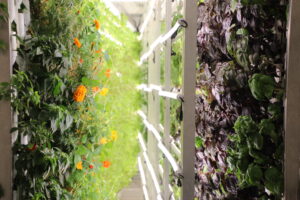
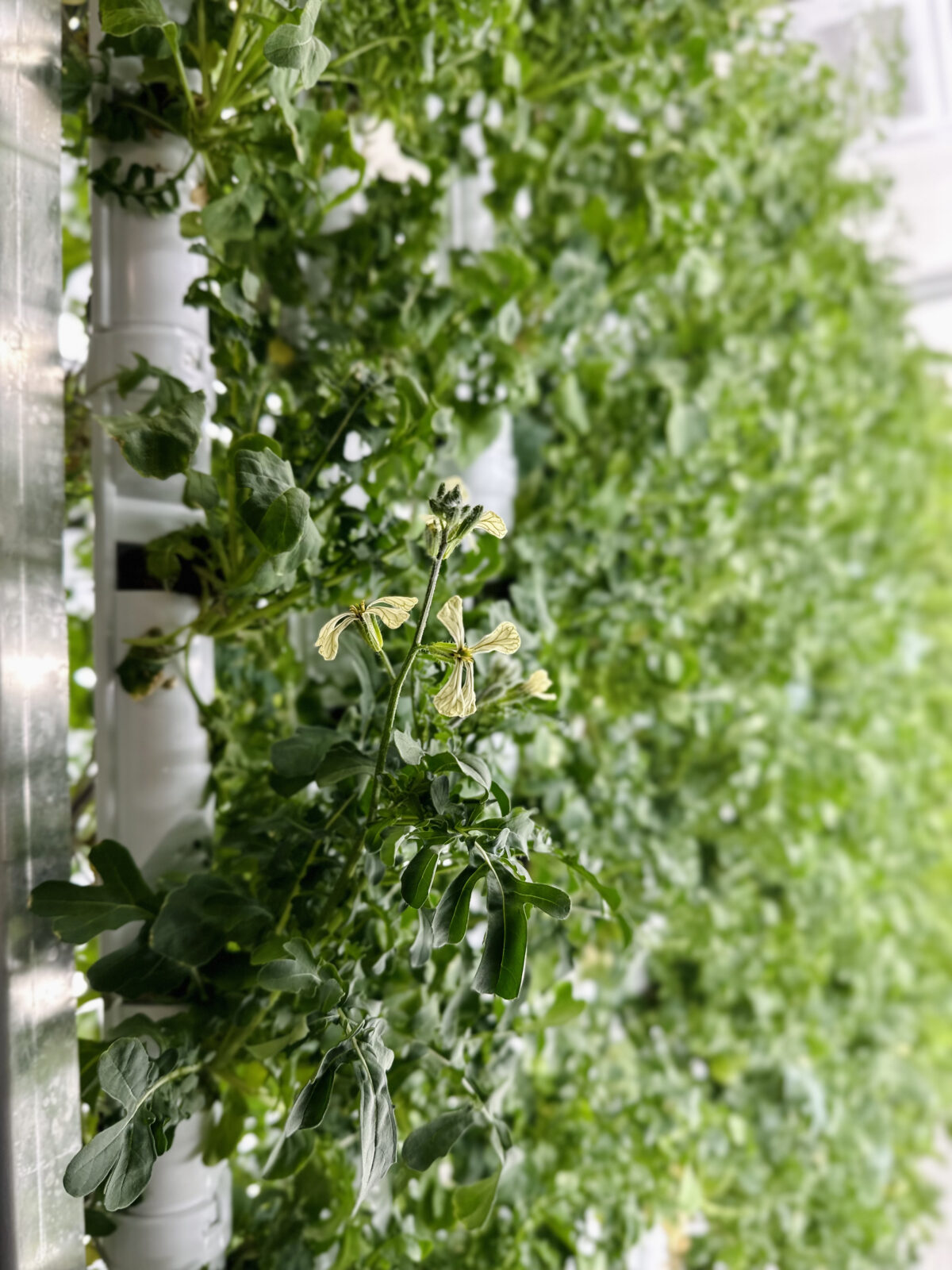
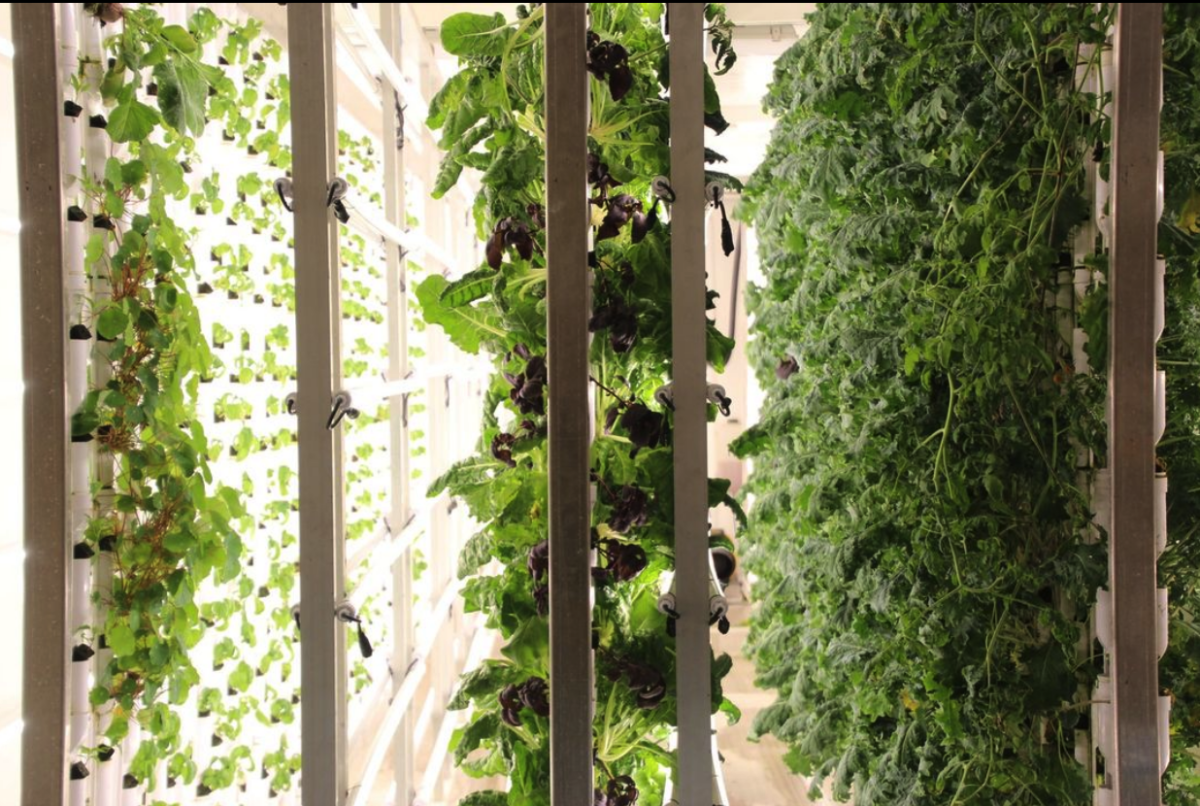
In the vertical farm, primarily leafy greens, culinary herbs, peppers, small tomatoes, micro greens and edible flowers.
In the mushroom farm, a host of gourmet and functional mushrooms, from oysters and lion’s mane to chestnuts, reishi and king trumpets.
The Hydroponic Fodder Farm allows you to sprout a variety of cereal grains, and we’ve primarily tested and grown barley grass and wheatgrass.
Do I need to have to know a lot about plants (VHF), mushrooms (GMF) or fodder (HFF) before starting?
No, but it doesn’t hurt. Having a horticultural or mycological foundation helps you know what to look for when starting to grow on a mass scale. In addition to our online training (and on-site training at your location), we encourage container farm purchasers to research the plants or mushrooms they’re planning to grow. What environmental conditions do they like best? What are the optimal nutrient levels for the water? Are the root systems for these plants compatible with vertical farming using tubes? That being said, we pass along everything we learned during our research-and-development phase to our customers.
Since the farms are automated, does that mean they can run themselves?
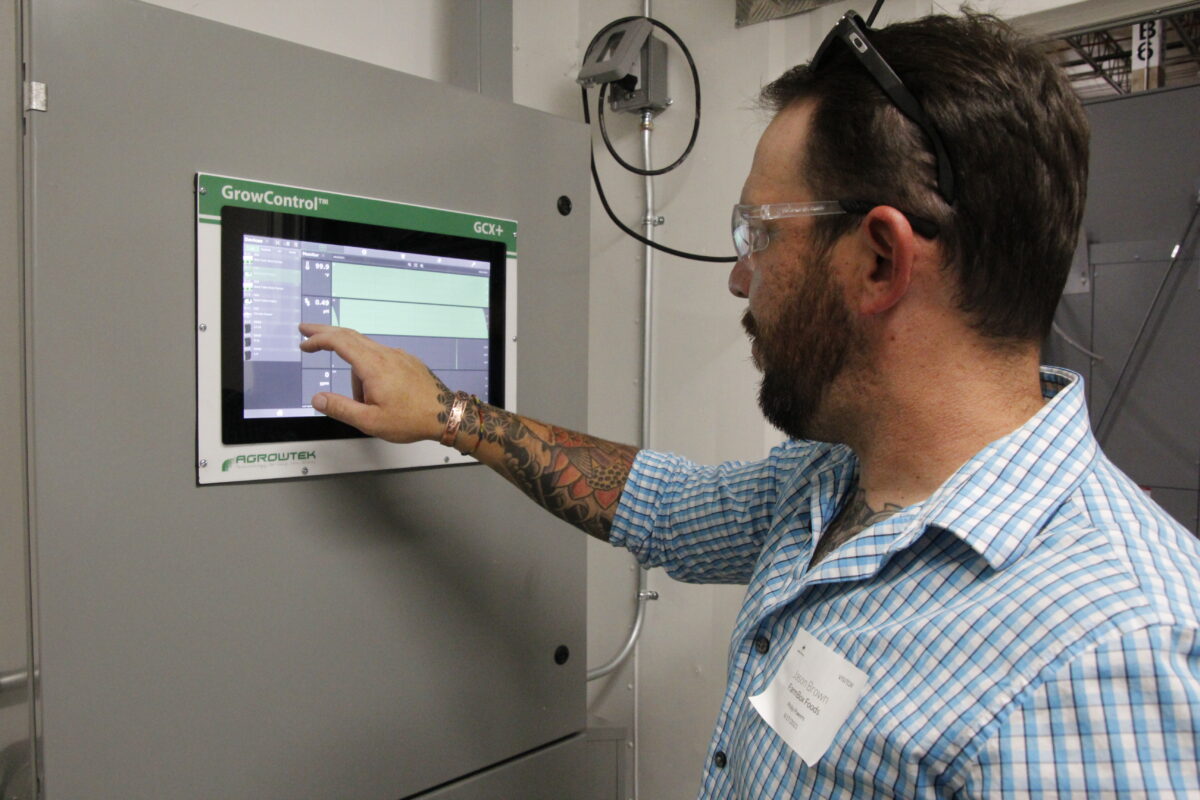
No. Let’s start with this: the technology in FarmBox Foods-made container farms is really cool. Digital sensors and a simple-to-use interface help you balance water pH levels, monitor and adjust nutrient concentrations, set the watering schedule, and much more. But the farms require the human eye and the human touch. A Vertical Hydroponic Farm generally requires one person to work 15-20 hours per week.
Do you provide a farmer to run my container farm?
That’s our plan down the road, but for now it’s up to you to find someone with the time and dedication necessary to run a container farm year-round. We do train your farmer on site with all the skills to grow successfully.
How often can I harvest?
In the Vertical Hydroponic Farm, a staggered growing schedule allows you to harvest every week. In the Gourmet Mushroom Farm, you can harvest twice a week. The Hydroponic Fodder Farm requires daily harvesting.
What sort of power hookup do I need?
Both farms require a 100 amp, 220VAC single-phase hookup. A main breaker disconnect is provided on each unit, which allows for overhead or underground termination.
What is the daily average energy consumption of each farm?
Vertical Hydroponic Farm: The average, total energy usage per day is 190 kWh. Peaks will be around 11 kWh. The bulk of this energy usage is for the grow lights which run at night. There is also a significant amount of usage for climate control.
Gourmet Mushroom Farm: The average total energy usage per day is 50-70 kWh. Peaks will be around 12 kWh. The bulk of this energy usage is for the sterilizer which runs 3-4 times weekly. Climate control is the other significant user of electricity.
Hydroponic Fodder Farm: The average total energy usage per day is around 60 kWh, depending on the climate in which the farm operates. Hotter locales require more A/C to keep the plants cool, whereas colder climates require more warmth.
How much water do the farms use?
Vertical Hydroponic Farm: Around 10-15 gallons per day on average. Additionally, the farm’s water tanks have to be refilled after flushing your nutrients (this occurs about every 8 weeks). The total volume of the two tanks is 130 gallons. Beyond what you need for growing, water is also required for cleaning.
Gourmet Mushroom Farm: Depending on how many substrate bags you produce weekly, the farm’s total water usage can be up to 100 gallons per week.
Hydroponic Fodder Farm: 450-500 gallons. This is still a 90 percent reduction when compared with irrigating pasture.
How is water treated in the farms?
VHF: The farm has integrated reverse osmosis systems. Water pH is also treated.
GMF: Water for the humidification system is run through a reverse osmosis system.
Do you offer troubleshooting services if I need them?
FarmBox Foods will never leave customers without a resource for help. In the first year of operation, our team helps diagnose and walk customers through rectifying any issues that may arise. We charge an hourly rate for support after that year is up.
Since you use upcycled shipping containers, should I expect them to be in rough shape?
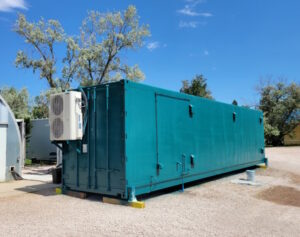
Part of our commitment to making this whole operation more eco-friendly is upcycling — or repurposing — existing shipping containers instead of expending time, energy, money and materials to build new ones. With that in mind, you should expect a few dings and scrapes on the outside of the container. However, these superficial blemishes can often be concealed with a good wrap or paint job (optional). The inside of the container will be pristine, and we will never build a farm inside any container that is not structurally up to the task.
Do you deliver your farms?
Absolute-ly. We have a partnership with Absolute Logistics, which has been in the business for nearly 30 years. They handle all transportation planning, including customs procedures, so there’s no need to arrange your own shipping with a separate company. The cost of shipping is included in your final price.
Is there a FarmBox Foods app?
Not yet. We’re in the process of developing an app that enables farmers to connect directly with their container farm.
Do you provide the seeds and seed plugs needed for my operation?
Yes. But you can also find your own seed and seed plug distributor if you’d like. We’re happy to provide recommendations.
What is the warranty on the farms?
Both farms come with a 1-year warranty that covers all parts and labor.
How often do you have to clean the tubes in the VHF?
Every other harvest, so every 2-3 months.
How much do they produce?
It all depends on what you’re growing, but we estimate 200 pounds of veggies per week.
What’s the lifespan of a container farm?
With proper maintenance, the farms can last up to 25-30 years.
Are there ongoing costs?
Operational costs vary depending on location. Water rates, electricity rates and delivery costs are among the variables. Reach out to us at info@farmboxfoods.com for a full packet of information.
Are there financing options for your container farms?
Yes. We have preferred financing partners to arrange financing, but talk to your sales rep to find out what loans and grants might be available.
What measures can I take to prevent water emitters and filters from clogging?
Emitters are going to clog. It’s almost assured. The emitters are easy to change and clean out for reuse. FarmBox Foods is working towards finding a solution that makes this less likely to happen. As for filters, in time they will clog but if good practices are in place, they should never impact the ability to function. Simple cleaning of the filters, on a schedule, will keep the filters operational.
What components will need periodic replacement?
VHF: Dehumidifier air filter quarterly; grow tubes don’t need to be replaced unless they break (this is very unlikely); LEDs every 5-10 years; reverse osmosis filters (frequency varies by filter and water supply quality, but they require yearly replacement on average).
GMF: Misting pump filters and oil quarterly; sterilizer heating elements quarterly; air conditioning filters yearly; LEDs every 5-10 years; UV-C bulb every 5-10 years.
What replacement items would you always keep on hand to keep the farms running smoothly?
VHF: Electric ball valves, liquid level sensors, emitters, backup relays
GMF: Sterilizer heating elements, air conditioning filters, filters and oil for the misting pump, backup humidifier and backup relays.
Can the seedling plugs and spent mushroom substrate be used for further plant growing practices once they are removed from the farms?
Yes, both items can be incorporated into compost. The spent mushroom substrate in particular is quite sought after for this purpose. It can also be simply incorporated into soil and will continue to grow mushrooms if properly managed.
Is the water in the VHF that is disposed of when cleaning the tanks usable for irrigation or flower bed watering? Can we reuse it somewhere else so it is not wasted?
Yes, but we recommend using this water for established plants, trees, shrubs, lawns only.
In the case of a loss of power, how will this affect the farms? How long would the farms survive without power?
VHF: During a blackout, the most adverse effect to the plants would be that they wouldn’t be watered by the grow control. In such a scenario, you could keep everything alive by watering manually. Realistically, 24-48 hours (with manual watering) is the longest time period that power could be out without plants starting to die.
GMF: Mushrooms are quite resistant to power outages — the worst outcome from an extended loss of power will be that mushrooms don’t receive the proper humidification. Mushrooms will last up to several days in imperfect environments but will revive pretty quickly once environmental conditions are re-established.
Can the lights be programmed and controlled per wall?
Yes, your Agrowtek system allows for control of individual light walls, as well as watering.
What is included with the purchase of each farm?
VHF: Seedling table; nutrient tanks; water tanks; probes for nutrients; reverse osmosis systems; LED lighting; air conditioning systems; circulation fans; computer and grow control software; ozone generation systems; grow walls; grow tubes; water heater; hand sink; water pumps; electrical panel; critical spares kit
GMF: Substrate mixing and bagging machine; sterilization devices; utility sink; air conditioning systems; grow control; circulation fans; lab table; HEPA flow cabinet; movable racking; UV-C lighting; LED lighting; misting pump; hot plate; refrigerator; water heater; electrical panel; critical spares kit.
Hydroponic Fodder Farm: Everything you need to grow successfully, no add-ons required. 42 trays, racking, hopper, plumbing, fans, dehumidifier and more.
What nutrients does the VHF use?
We recommend the following nutrients and additives:
General Hydroponics FloraMicro 2-1-6
General Hydroponics FloraGro 5-0-1
General Hydroponics pH Down/Up
Alchemist 34% Liquid Oxygen
See this link for nutrient information:
https://generalhydroponics.com/products/floraseries/
What produce prices can I expect in my area?
We are unfortunately not privy to the market costs of produce in any particular area around the world, but we can help you find this information and complete ROI sheets to assist you in determining the viability of your farm.
What is the warranty on the farms?
All farms come with a 1-year warranty that covers all parts and labor.
Can the farms operate in desert climates?
Yes, our farms are fully insulated and operate without any problem in extreme environments.
How do I connect my water source to the farm?

We use a standard 3/4-inch garden hose connection for all farms. From there, water is piped inside and through each farm’s respective reverse osmosis systems.
How many movable walls are there in the VHF?
There are three grow walls and two light walls. Each wall is double sided to maximize space inside the farm.
Do the farms meet Canadian building code standards?
Yes, FarmBox Foods farms meet or exceed compliance requirements for ICL, IBC, NEC, UL(C), ETL, CSA.