
Container Farm FAQs – Shedding Light on Emerging Farm Tech

Given that the container farm industry is still an emerging one, those who are just finding out about this food production technology understandably have a lot of questions. We decided to aggregate the most common questions we’ve heard over our nine-year history, including the basics. Happy reading and if we’ve missed anything, please let us know at info@farmboxfoods.com!

What can these farms grow?
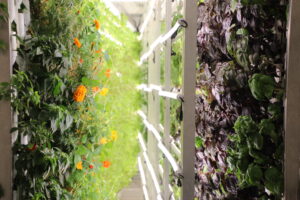
Slidable grow walls in a vertical farm.

In the vertical farm, primarily leafy greens, culinary herbs, peppers, small tomatoes, micro greens and edible flowers.

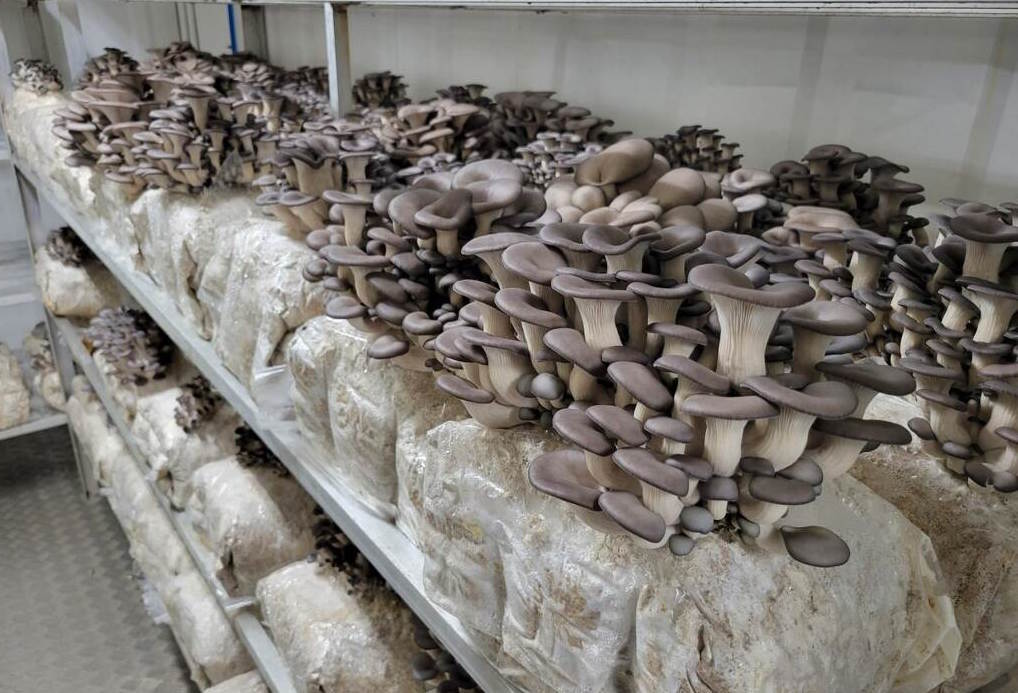
In the mushroom farm, a host of gourmet and functional mushrooms, from oysters and lion’s mane to chestnuts, reishi and king trumpets.

The Hydroponic Fodder Farm allows you to sprout a variety of cereal grains, and we’ve primarily tested and grown barley grass and wheatgrass.

Do I need to have to know a lot about plants (VHF), mushrooms (GMF) or fodder (HFF) before starting?

No, but it doesn’t hurt. Having a horticultural or mycological foundation helps you know what to look for when starting to grow on a mass scale. In addition to our online training (and on-site training at your location), we encourage container farm purchasers to research the plants or mushrooms they’re planning to grow. What environmental conditions do they like best? What are the optimal nutrient levels for the water? Are the root systems for these plants compatible with vertical farming using tubes? That being said, we pass along everything we learned during our research-and-development phase to our customers.

Since the farms are automated, does that mean they can run themselves?
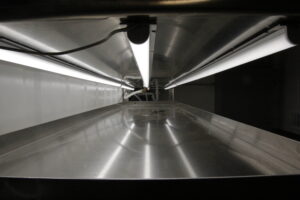
A seedling table that uses sub-irrigation to water new plants.

No. Let’s start with this: the technology in FarmBox Foods-made container farms is really cool. Digital sensors and a simple-to-use interface help you balance water pH levels, monitor and adjust nutrient concentrations, set the watering schedule, and much more. But the farms require the human eye and the human touch. A Vertical Hydroponic Farm generally requires one person to work 15-20 hours per week.

Do you provide a farmer to run my container farm?

That’s our plan down the road, but for now it’s up to you to find someone with the time and dedication necessary to run a container farm year-round. We do train your farmer on site with all the skills to grow successfully.

How often can I harvest?

In the Vertical Hydroponic Farm, a staggered growing schedule allows you to harvest every week. In the Gourmet Mushroom Farm, you can harvest twice a week. The Hydroponic Fodder Farm requires daily harvesting.

What sort of power hookup do I need?
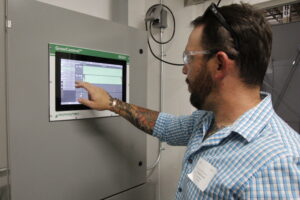
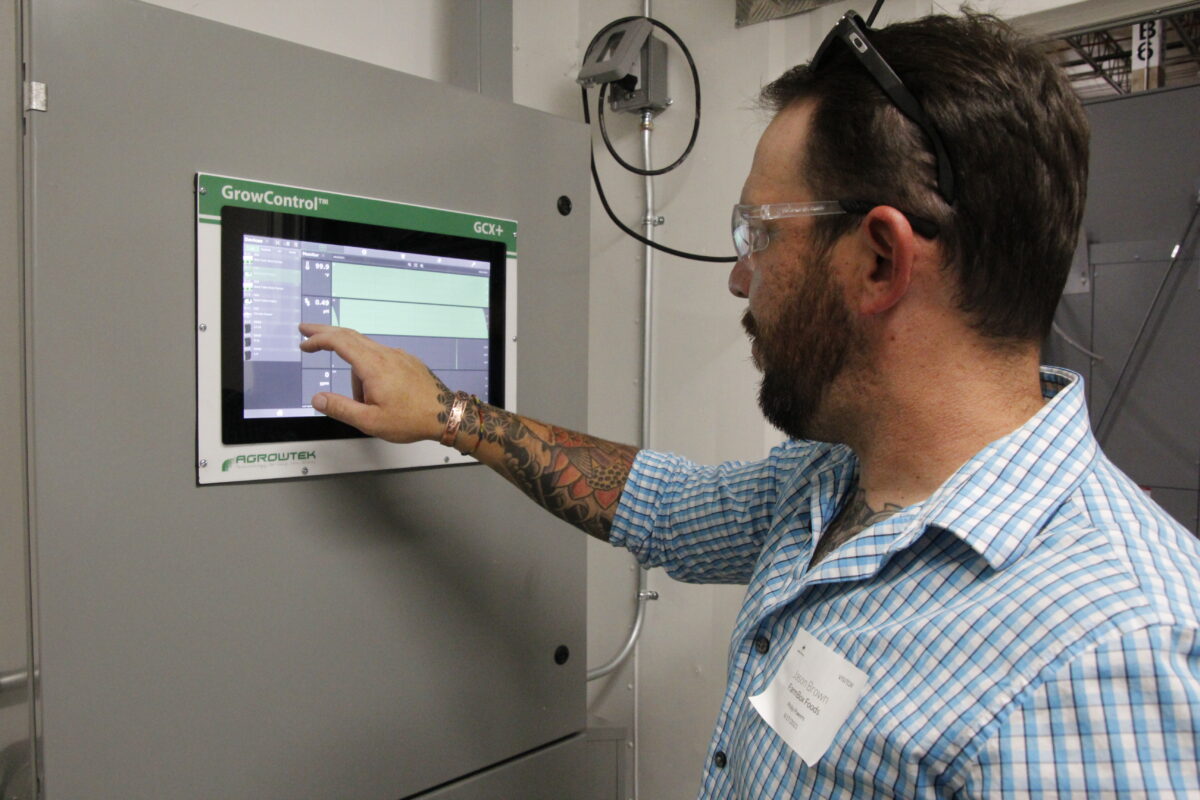
Jason Brown, VP of operations, setting environmental conditions using a grow-control screen.

Both farms require a 100 amp, 220VAC single-phase hookup. A main breaker disconnect is provided on each unit, which allows for overhead or underground termination.

What is the daily average energy consumption of each farm?

Vertical Hydroponic Farm: The average, total energy usage per day is 190 kWh. Peaks will be around 11 kWh. The bulk of this energy usage is for the grow lights which run at night. There is also a significant amount of usage for climate control.

Gourmet Mushroom Farm: The average total energy usage per day is 50-70 kWh. Peaks will be around 12 kWh. The bulk of this energy usage is for the sterilizer which runs 3-4 times weekly. Climate control is the other significant user of electricity.

Hydroponic Fodder Farm: The average total energy usage per day is around 60 kWh, depending on the climate in which the farm operates. Hotter locales require more A/C to keep the plants cool, whereas colder climates require more warmth.

How much water do the farms use?

Vertical Hydroponic Farm: Around 10-15 gallons per day on average. Additionally, the farm’s water tanks have to be refilled after flushing your nutrients (this occurs about every 8 weeks). The total volume of the two tanks is 130 gallons. Beyond what you need for growing, water is also required for cleaning.

Gourmet Mushroom Farm: Depending on how many substrate bags you produce weekly, the farm’s total water usage can be up to 100 gallons per week.

Hydroponic Fodder Farm: 450-500 gallons. This is still a 90 percent reduction when compared with irrigating pasture.

How is water treated in the farms?

VHF: The farm has integrated reverse osmosis systems. Water pH is also treated.

GMF: Water for the humidification system is run through a reverse osmosis system.

Do you offer troubleshooting services if I need them?

FarmBox Foods will never leave customers without a resource for help. In the first year of operation, our team helps diagnose and walk customers through rectifying any issues that may arise. We charge an hourly rate for support after that year is up.

Since you use upcycled shipping containers, should I expect them to be in rough shape?
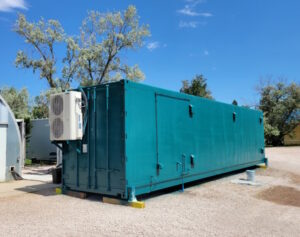
The exterior of a Hydroponic Fodder Farm made by FarmBox Foods.

Part of our commitment to making this whole operation more eco-friendly is upcycling — or repurposing — existing shipping containers instead of expending time, energy, money and materials to build new ones. With that in mind, you should expect a few dings and scrapes on the outside of the container. However, these superficial blemishes can often be concealed with a good wrap or paint job (optional). The inside of the container will be pristine, and we will never build a farm inside any container that is not structurally up to the task.

Do you deliver your farms?

Absolute-ly. We have a partnership with Absolute Logistics, which has been in the business for nearly 30 years. They handle all transportation planning, including customs procedures, so there’s no need to arrange your own shipping with a separate company. The cost of shipping is included in your final price.

Is there a FarmBox Foods app?

Not yet. We’re in the process of developing an app that enables farmers to connect directly with their container farm.

Do you provide the seeds and seed plugs needed for my operation?

Yes. But you can also find your own seed and seed plug distributor if you’d like. We’re happy to provide recommendations.

What is the warranty on the farms?

Both farms come with a 1-year warranty that covers all parts and labor.

How often do you have to clean the tubes in the VHF?

Every other harvest, so every 2-3 months.

How much do they produce?

It all depends on what you’re growing, but we estimate 200 pounds of veggies per week.

What’s the lifespan of a container farm?

With proper maintenance, the farms can last up to 25-30 years.

Are there ongoing costs?

Operational costs vary depending on location. Water rates, electricity rates and delivery costs are among the variables. Reach out to us at info@farmboxfoods.com for a full packet of information.

Are there financing options for your container farms?

Yes. We have preferred financing partners to arrange financing, but talk to your sales rep to find out what loans and grants might be available.
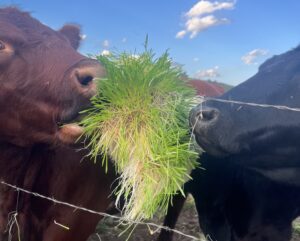
Cows sharing barley fodder grown in a Hydroponic Fodder Farm.

What measures can I take to prevent water emitters and filters from clogging?

Emitters are going to clog. It’s almost assured. The emitters are easy to change and clean out for reuse. FarmBox Foods is working towards finding a solution that makes this less likely to happen. As for filters, in time they will clog but if good practices are in place, they should never impact the ability to function. Simple cleaning of the filters, on a schedule, will keep the filters operational.

What components will need periodic replacement?

VHF: Dehumidifier air filter quarterly; grow tubes don’t need to be replaced unless they break (this is very unlikely); LEDs every 5-10 years; reverse osmosis filters (frequency varies by filter and water supply quality, but they require yearly replacement on average).

GMF: Misting pump filters and oil quarterly; sterilizer heating elements quarterly; air conditioning filters yearly; LEDs every 5-10 years; UV-C bulb every 5-10 years.

What replacement items would you always keep on hand to keep the farms running smoothly?

VHF: Electric ball valves, liquid level sensors, emitters, backup relays

GMF: Sterilizer heating elements, air conditioning filters, filters and oil for the misting pump, backup humidifier and backup relays.

Can the seedling plugs and spent mushroom substrate be used for further plant growing practices once they are removed from the farms?

Yes, both items can be incorporated into compost. The spent mushroom substrate in particular is quite sought after for this purpose. It can also be simply incorporated into soil and will continue to grow mushrooms if properly managed.

Is the water in the VHF that is disposed of when cleaning the tanks usable for irrigation or flower bed watering?  Can we reuse it somewhere else so it is not wasted?

Yes, but we recommend using this water for established plants, trees, shrubs, lawns only.

In the case of a loss of power, how will this affect the farms? How long would the farms survive without power?

VHF: During a blackout, the most adverse effect to the plants would be that they wouldn’t be watered by the grow control. In such a scenario, you could keep everything alive by watering manually. Realistically, 24-48 hours (with manual watering) is the longest time period that power could be out without plants starting to die.

GMF: Mushrooms are quite resistant to power outages — the worst outcome from an extended loss of power will be that mushrooms don’t receive the proper humidification. Mushrooms will last up to several days in imperfect environments but will revive pretty quickly once environmental conditions are re-established.

Can the lights be programmed and controlled per wall?

Yes, your Agrowtek system allows for control of individual light walls, as well as watering.

What is included with the purchase of each farm?

VHF: Seedling table; nutrient tanks; water tanks; probes for nutrients; reverse osmosis systems; LED  lighting; air conditioning systems; circulation fans; computer and grow control software; ozone  generation systems; grow walls; grow tubes; water heater; hand sink; water pumps; electrical panel;  critical spares kit

GMF: Substrate mixing and bagging machine; sterilization devices; utility sink; air conditioning systems;  grow control; circulation fans; lab table; HEPA flow cabinet; movable racking; UV-C lighting; LED lighting;  misting pump; hot plate; refrigerator; water heater; electrical panel; critical spares kit.

Hydroponic Fodder Farm: Everything you need to grow successfully, no add-ons required. 42 trays, racking, hopper, plumbing, fans, dehumidifier and more.

What nutrients does the VHF use?

We recommend the following nutrients and additives:

General Hydroponics FloraMicro 2-1-6

General Hydroponics FloraGro 5-0-1

General Hydroponics pH Down/Up

Alchemist 34% Liquid Oxygen

See this link for nutrient information:

https://generalhydroponics.com/products/floraseries/

What produce prices can I expect in my area?

We are unfortunately not privy to the market costs of produce in any particular area around the world, but we can help you find this information and complete ROI sheets to assist you in determining the viability of your farm.

What is the warranty on the farms?

All farms come with a 1-year warranty that covers all parts and labor.

Can the farms operate in desert climates?

Yes, our farms are fully insulated and operate without any problem in extreme environments.

How do I connect my water source to the farm?

Chestnut mushrooms grown in a Gourmet Mushroom Farm.

We use a standard 3/4-inch garden hose connection for all farms. From there, water is piped inside and through each farm’s respective reverse osmosis systems.

How many movable walls are there in the VHF?

There are three grow walls and two light walls. Each wall is double sided to maximize space inside the farm.

Do the farms meet Canadian building code standards?

Yes, FarmBox Foods farms meet or exceed compliance requirements for ICL, IBC, NEC, UL(C), ETL, CSA.
7 Lesser-Known Advantages of Container Farming

Controlled-environment farming is often framed around a familiar set of advantages like reduced water use, fewer pesticides and year-round growing. While those benefits are important, they only tell part of the story. Beneath the surface, controlled-environment agriculture offers several lesser-known advantages that can quietly reshape how food is produced, distributed and understood.

Predictability That Strengthens the Food System

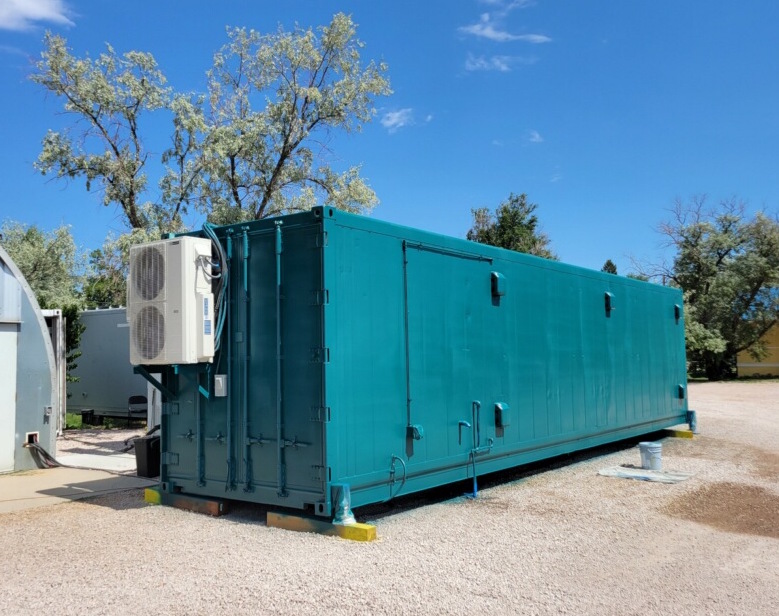
One of the most overlooked benefits of controlled-environment farming is predictability. By managing temperature, light, humidity and nutrients, growers can achieve consistent yields on reliable schedules. An exterior view of a container farmThis stability is especially valuable for institutions like schools, hospitals and food banks that depend on steady supply rather than fluctuating seasonal availability. Predictable production reduces planning challenges and helps limit unnecessary food waste.
Lower Risk of Food Safety Issues

Indoor growing environments reduce exposure to many contamination risks commonly associated with outdoor agriculture. Runoff, wildlife intrusion and airborne pollutants are largely removed from the equation. In addition, controlled systems allow for detailed tracking of each growing cycle, making traceability clearer and responses faster if issues arise. This level of oversight can significantly lower the likelihood of large-scale recalls.

Expanded Access to Agricultural Careers

Controlled-environment farms rely on a wide range of skills that extend beyond traditional farming experience. Roles often include systems monitoring, data analysis, logistics and maintenance. This broadens access to agricultural careers for people in urban areas, students pursuing STEM education and individuals transitioning from other industries. The result is a more diverse workforce contributing to food production.

Consistent Crop Quality and Nutrition

Plants grown in stable conditions experience less environmental stress, which can lead to more uniform size, flavor and nutritional content. This consistency is particularly important for meal programs and healthcare settings where dietary planning depends on predictable nutrient profiles. While variability is often accepted as a norm in agriculture, consistency can be a quiet but meaningful advantage.

Productive Use of Underutilized Spaces

Controlled-environment farming allows food to be grown in places that would otherwise be unsuitable for agriculture. Vacant lots, industrial areas and unused campus spaces can become productive without displacing existing farmland. At the same time, this flexibility can reduce pressure on arable land and allow ecosystems time to recover, supporting long-term environmental health.

Faster Innovation and Crop Testing

Because growing conditions can be replicated precisely, controlled-environment systems make it easier to test new crop varieties and growing methods. Growers can evaluate flavor, yield and resilience in shorter timeframes without the uncertainty of weather or seasonal change. This accelerates innovation and helps introduce crops better suited to regional needs and evolving consumer preferences.

Greater Transparency and Education

Indoor farms offer a clear view into how food is grown, from seed to harvest. This visibility creates opportunities for education and community engagement that are often difficult in conventional agriculture. When people can see the process firsthand, it builds understanding and trust while helping reconnect communities with the origins of their food.

As controlled-environment farming continues to evolve, its impact extends well beyond efficiency and sustainability metrics. By improving reliability, safety, access and understanding, these systems quietly address challenges that affect the entire food ecosystem. Recognizing these lesser-known benefits helps broaden the conversation about what modern agriculture can achieve.

Food System Resiliency in a Box, No Matter Where You Live

For centuries, the ability to grow food has been bound by geography. Fertile soil, predictable weather and access to water determined who could farm and who could not. But a new era in agricultural technology is set to dismantle those boundaries, giving people everywhere the power to grow their own food, regardless of climate, location or experience. From the frozen outskirts of Alaska to the heart of desert cities, innovations in controlled-environment agriculture (CEA) are reshaping what it means to be self-sufficient.

At the core of this movement are systems designed to make farming as accessible as it is sustainable. Container farms, vertical gardens and modular hydroponic units are transforming empty lots, parking garages and even rooftops into thriving centers of food production. These systems use precise sensors and automation to control every variable — from temperature and humidity to light spectrum and nutrient delivery — creating optimal growing conditions 365 days a year. The result is reliable, pesticide-free food that can be harvested within walking distance of the people who will eat it.

For families and communities once disconnected from the source of their food, this technology offers more than convenience; it restores agency. No longer dependent on global supply chains or industrial farms, people can now produce mushrooms, fresh greens, herbs and even some fruits with minimal land and water use. It’s a form of empowerment that reaches beyond nourishment; it reconnects humans with nature in a way that fits our modern, urbanized lives. A shipping container on the edge of town can now provide thousands of pounds of produce annually, feeding schools, hospitals and neighborhoods that historically have faced food insecurity.

Emerging ag tech is also bridging cultural and economic divides. In developing regions where arable land is scarce or drought is common, compact, solar-powered systems allow for year-round harvests. In major cities, startups are pairing automation with education, helping residents learn the science of growing and inspiring a new generation of urban farmers. Every innovation, from AI-driven irrigation systems to seed-to-harvest data analytics, is refining the process and making local food production more efficient and attainable than ever before.

As climate shifts challenge traditional agriculture, these technologies are proving to be more than a novelty; they’re a blueprint for resilience. They reduce water consumption by up to 95 percent, eliminate the need for chemical pesticides and drastically reduce food miles, cutting emissions tied to transport and storage. More importantly, they shift the narrative from dependence to participation. Food is no longer something that happens on distant farmland; it’s something that can thrive anywhere people choose.

The democratization of food production marks a turning point in human history. Agriculture began as a means of survival and evolved into an industry. Now, with emerging ag tech, it’s coming full circle, returning to individuals and communities who can once again grow what sustains them. It’s a movement defined not by scale, but by access, creativity and connection. And as the technology continues to advance, it carries with it a simple but transformative promise: no matter where you live, you can cultivate your own future.

The Many Benefits of Modular Farming

In recent years, interest in container farming has grown rapidly as communities, entrepreneurs and institutions look for ways to build a more sustainable and resilient food system. Using insulated shipping containers that are retrofitted for agriculture, these farms are transforming the way food is produced and distributed. Whether referred to as farm containers, a farm in a container or a container vertical farm, this model of food production is redefining what it means to grow fresh, local food.

What Is Container Farming?

At its core, container farming is the practice of growing crops inside repurposed shipping containers that are equipped with advanced climate control and growing systems. These farms often use hydroponics in a shipping container, allowing plants to grow in nutrient-rich water rather than soil. The result is a tightly controlled environment that minimizes resource use while maximizing yield.

A container farm can be installed almost anywhere, from urban parking lots and rural communities to universities, hospitals and corporate campuses. With modular systems, such as a vertical farm container, operators can expand their production capacity as needed. This flexibility is one of the main reasons why container farming companies are gaining attention worldwide.

Key Advantages of Container Farming

Year-Round Food Production

One of the greatest advantages of a shipping container farm is its ability to produce crops consistently throughout the year. Traditional farming is often disrupted by weather, pests or drought, but a shipping container vertical farm uses controlled lighting, humidity and temperature to ensure steady growth.

Resource Efficiency

Container farming is designed for efficiency. With hydroponic farming containers, plants use up to 95% less water compared to traditional agriculture. Vertical designs and hydroponic grow containers maximize space while conserving nutrients and energy. Many farms even integrate renewable energy solutions, such as solar-powered or insulated farm containers, to reduce operating costs and environmental impact.

Food Security and Local Access

By producing food close to the point of consumption, container farms reduce the distance food travels. A farm-in-a-box shipping container can serve schools, grocery stores and restaurants within the same community. This reduces transportation emissions, shortens supply chains and strengthens food security. For institutions or nonprofits, container farms provide a reliable way to grow fresh produce in underserved areas.

Scalability and Commercial Opportunities

For entrepreneurs, container farms represent a clear business opportunity. Companies can start small with a single container hydroponic farm and expand into multiple container farms for sale as demand grows. Specialty products, such as herbs or microgreens, thrive in hydroponic shipping container farms, making it possible to supply local markets with premium goods.

Specialty Crop Cultivation: Gourmet Mushrooms

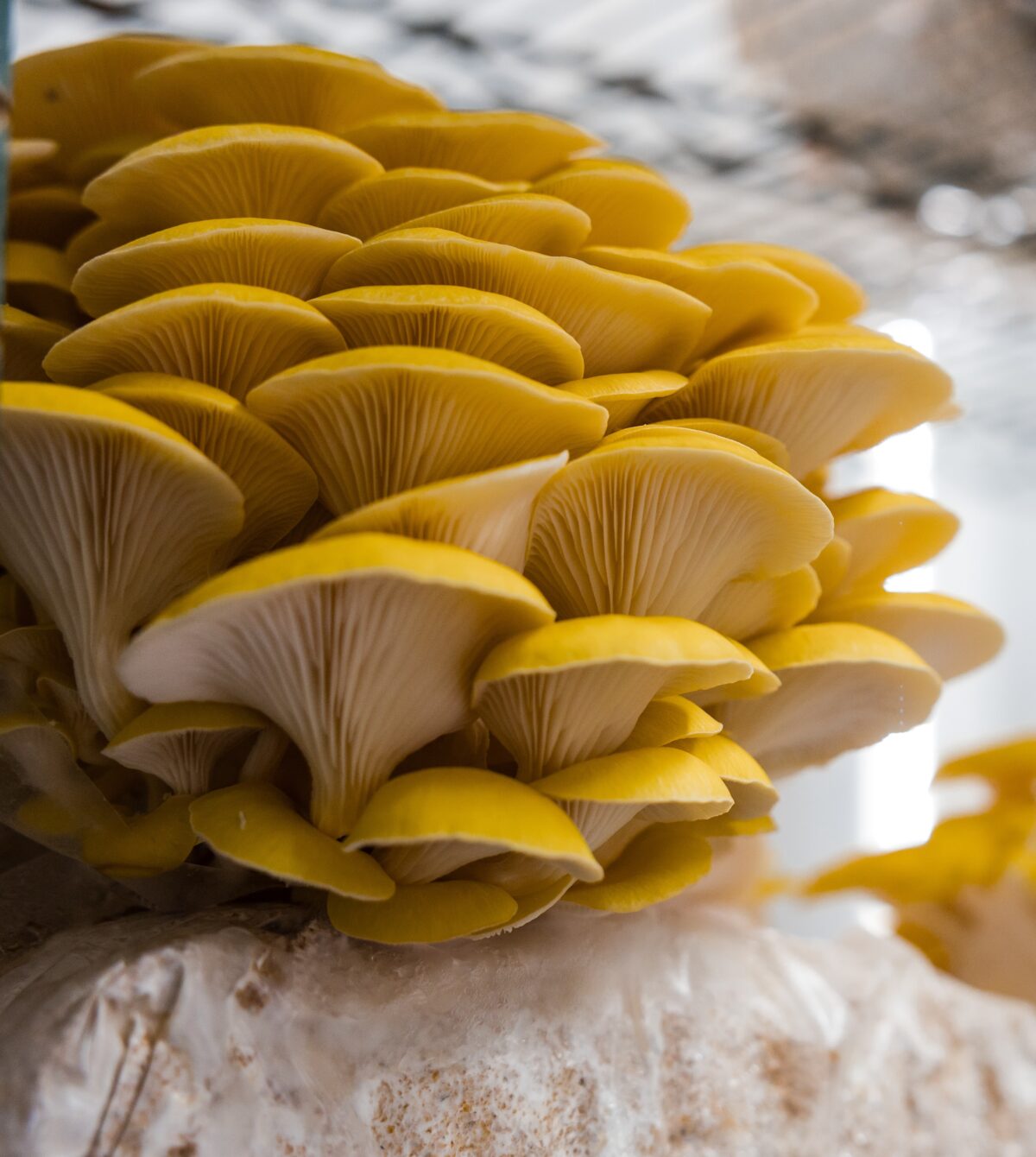
Beyond leafy greens and herbs, container systems are ideal for specialty crops like mushrooms. A mushroom container farm provides the perfect humidity and temperature for varieties such as oyster and lion’s mane mushrooms. Businesses interested in gourmet mushroom cultivation are finding that a mushroom shipping container offers predictable, scalable yields. Restaurants, grocers and local markets are increasingly sourcing from growing mushrooms in shipping containers because of their consistent quality and freshness.

Resilient, Climate-Smart Farming

Extreme weather and climate change have put a strain on traditional agriculture, but container agriculture offers resilience. Because they are protected and controlled environments, container farms are insulated from droughts, hail, floods or unexpected frosts. This makes them a dependable food source in regions facing environmental instability.

Applications Across Industries

Urban Farming: A shipping container grow pod can turn unused lots into food production sites.

Education: Schools and universities are using vertical farming in shipping containers to teach students about sustainability, technology and nutrition.

Hospitality: Hotels, resorts and restaurants benefit from having fresh herbs and greens grown on-site in a container vertical farm.

Animal Feed: A fodder farm or hydroponic farms for animal feed inside containers ensures reliable, nutrient-rich food for livestock.

Technology Driving the Movement

The success of container farming is powered by innovations in vertical hydroponics, LED lighting and automated monitoring systems. Advanced sensors track nutrient levels, while sensor-based climate control monitors and adjusts to keep plants thriving. This combination of container farming technology and renewable energy integration helps reduce labor and overhead while producing more food in less space.

The Economic Case for Container Farms

While many first hear about the environmental benefits of container farming, the economic advantages are equally important. A shipping container farm for sale can generate steady revenue for farmers, small businesses and nonprofits alike. Mushroom farms, in particular, are very profitable, with 70-percent profit margins common when selling a mix of wholesale and retail. By supplying local communities directly, operators cut out costly middlemen (and women) while keeping margins healthy. Additionally, with financing programs available to fund a container farm, the initial investment is more accessible than ever, especially when lease-to-own options are available.

Looking Ahead: The Future of Food Production

As demand for fresh, locally grown food continues to rise, container farming will play an even bigger role in shaping the agricultural landscape. Container hydroponics farms, mushroom production systems and modular vertical farms offer scalable solutions to global food insecurity. They provide a sustainable alternative that doesn’t just supplement traditional farming but enhances it, making food systems more resilient, efficient and adaptable.

Communities everywhere are beginning to embrace the concept of a farm in container agriculture model, not only because it addresses immediate needs like food security and water conservation, but also because it represents a long-term shift toward sustainable living.