Your Salad Took a Road Trip: The Surprising Numbers Behind America’s Food Transportation System

Take a look at the produce in your refrigerator.

That head of lettuce, carton of strawberries, or bunch of spinach likely traveled farther than many people do on vacation before landing in your shopping cart.
Our modern food system is incredibly efficient, allowing us to enjoy fresh fruits and vegetables year-round regardless of the season. But that convenience comes with a fascinating logistical story. Every day, millions of trucks, trains, ships and airplanes move food across the United States, consuming enormous amounts of fuel along the way.

The numbers don’t lie.

Just How Far Does Our Food Travel?

The concept of “food miles” measures the distance food travels from where it’s grown to where it’s eaten.

According to research compiled by the National Center for Appropriate Technology (NCAT), fresh produce in the United States travels an average of more than 1,500 miles before reaching consumers. Processed foods average over 1,300 miles.

Some crops travel even farther.

Researchers at the former Leopold Center for Sustainable Agriculture examined produce arriving at Chicago’s wholesale market and found:

  • Lettuce traveled over 2,000 miles
  • Broccoli traveled over 2,000 miles
  • Spinach traveled over 2,000 miles
  • Grapes traveled over 2,000 miles

The average distance for the 30 produce items studied was 1,518 miles.

Those numbers aren’t surprising when you consider that much of America’s produce comes from concentrated growing regions like California’s Central Valley, Arizona’s Yuma region, Florida and Mexico before being distributed nationwide.

The Trucking Industry Does the Heavy Lifting

While railroads and ships play important roles in moving agricultural commodities, trucks handle the vast majority of fresh food distribution.

Refrigerated trailers transport everything from lettuce and berries to milk and frozen foods while maintaining carefully controlled temperatures throughout the journey.

A typical semi-truck averages approximately 6 to 7 miles per gallon of diesel fuel, depending on terrain, weather, weight and aerodynamics. That means a truck hauling produce 1,500 miles will burn roughly 215 to 250 gallons of diesel on that trip alone.

Now multiply that by thousands of trucks delivering food across America every day, and the scale becomes staggering.

America’s Food Freight Adds Up Fast

Transportation is only one piece of the food system, but it’s a significant one.

According to NCAT, transportation accounts for approximately 14% of the total energy used within the U.S. food system.

Researchers from the University of Michigan also found that while food transportation is extensive, the production of food itself accounts for a larger share of overall greenhouse gas emissions. Transportation contributes roughly 11% of food-related greenhouse gas emissions, while the production phase accounts for about 83%.

In other words, growing food requires far more energy than moving it, but transportation still represents a meaningful opportunity for improving efficiency.

Every Mile Costs Money

Fuel is one of the largest operating expenses for trucking companies.

If diesel costs $3.75 per gallon and a truck averages 6.5 mpg, fuel alone costs roughly 58 cents per mile.

A 1,500-mile shipment therefore requires approximately $865 worth of diesel fuel, and that’s not counting driver wages, equipment maintenance, refrigeration systems, insurance, tires, depreciation and distribution centers

Those transportation costs are ultimately reflected in the price consumers pay at the grocery store.

Local Production Is Gaining Attention

None of this means long-distance transportation is inherently bad.

Large-scale agriculture often benefits from ideal climates, economies of scale and highly efficient logistics. In some cases, producing food in the best growing region and transporting it efficiently can actually have a smaller environmental footprint than producing it locally under less favorable conditions.

However, there are situations where producing food closer to where it’s consumed offers meaningful advantages.

Local production can reduce transportation costs, decrease fuel consumption, shorten supply chains, preserve freshness, reduce spoilage (and therefore food waste), and increase resilience when disruptions occur

This is especially true for highly perishable crops like leafy greens, herbs and specialty vegetables.

A Different Approach to Food Production

As weather events, labor shortages, and transportation costs continue to challenge traditional agriculture, many organizations are rethinking where food should be grown.

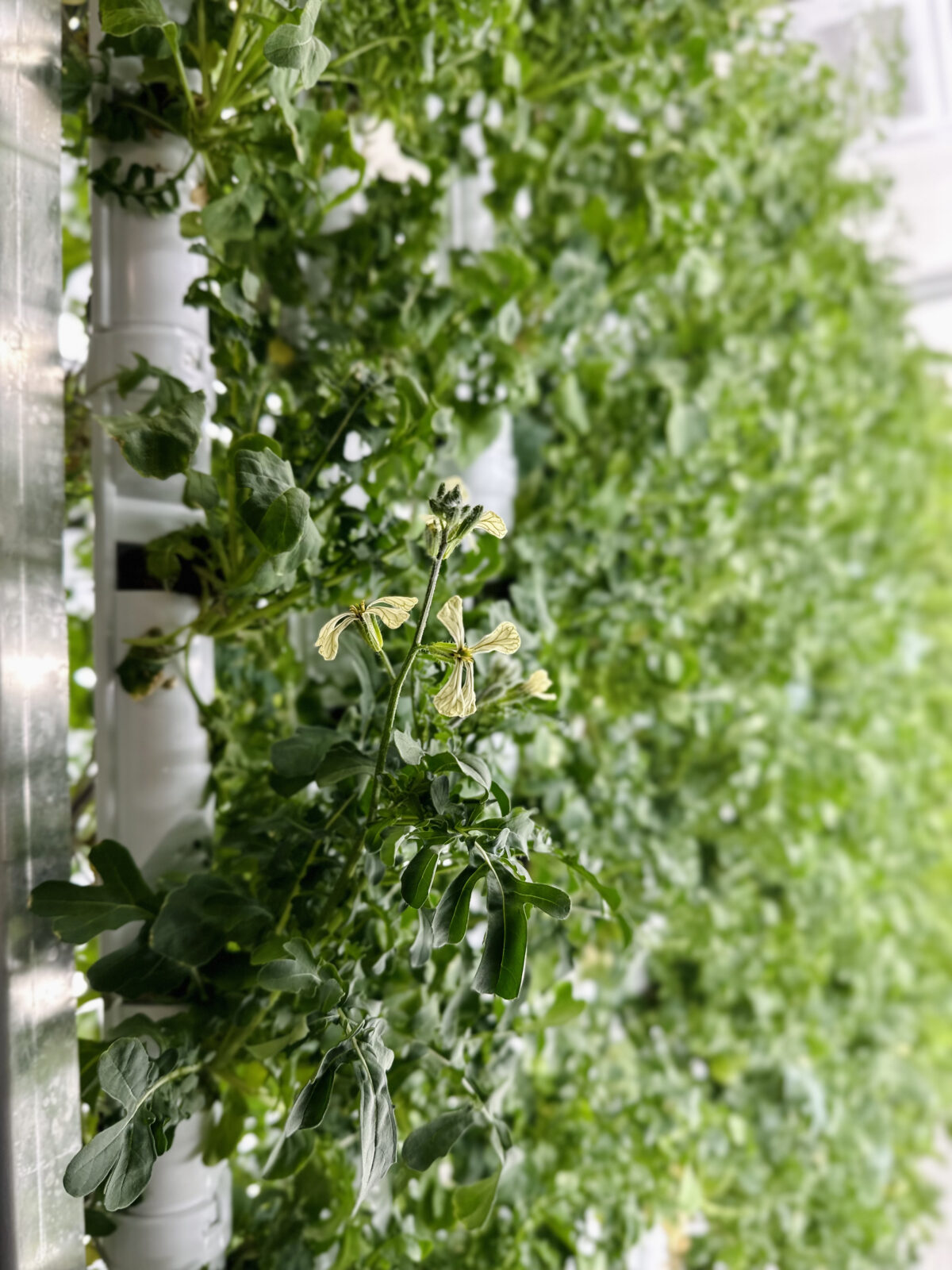
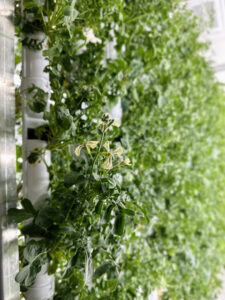
Controlled environment agriculture, including hydroponic container farms, allows fresh produce to be grown directly where it’s needed, whether that’s outside a grocery store, beside a restaurant, on a school campus, or at a military installation.

Instead of shipping lettuce 1,500 miles across the country, it’s possible to harvest it just a few hundred feet away from where it will be eaten.

That’s not about replacing traditional agriculture. America’s large farming regions will always play a vital role in feeding the country.

But shortening the distance between harvest and plate can reduce transportation costs, improve freshness, strengthen local food security and make communities less vulnerable to supply chain disruptions.

In a world where nearly every tomato, head of lettuce and package of herbs has its own transportation story, sometimes the shortest journey is the most valuable one.
Nonprofits, Businesses Turn to Container Farms to Support Missions

Every organization has a mission. For some, it’s feeding people in need. For others, it’s educating students, supporting local food systems, creating sustainable housing communities or providing restaurants with the freshest ingredients possible.

What unites a growing number of these organizations is their use of container farm technology to help achieve those goals.

FarmBox Foods’ controlled-climate hydroponic farms and gourmet mushroom farms are being deployed by nonprofits, schools, restaurants, agricultural businesses, healthcare organizations and residential communities across North America. While each customer has unique objectives, they all leverage the same core advantage: the ability to grow fresh food year-round, almost anywhere.

Nonprofits Fighting Food Insecurity

For many nonprofit organizations, access to fresh food is a central part of their mission.

FarmBox Foods has also partnered with community organizations focused on increasing food access in underserved neighborhoods. Programs such as the Focus Points Family Resource Center initiative in Denver’s Globeville, Elyria and Swansea neighborhoods use container farming technology to bring fresh produce directly into communities that have historically lacked reliable access to healthy food. Village Family Farms in Cleveland is another example of urban growers supplying their common city with healthy food.

Schools Creating Living Classrooms

Educational institutions have discovered that a container farm is much more than a food-production system. It becomes a hands-on learning laboratory.

At South Carolina Governor’s School for Science & Mathematics, a FarmBox Foods hydroponic farm serves as a research lab where students explore biology, engineering, environmental science, robotics and agriculture. The facility supports research projects while helping students tackle real-world challenges related to food production and sustainability.

Schools such as EPIC Campus, Venture Academy of Leadership and Entrepreneurship, Morgan Community College and The Villages Charter School use FarmBox Foods technology to teach plant science, business, nutrition, entrepreneurship and sustainable agriculture. Students gain practical experience while producing fresh food that benefits cafeterias, local nonprofits and community organizations.

Restaurants Building Hyper-Local Supply Chains

Restaurants are increasingly looking for ways to improve freshness, reduce transportation costs and strengthen sustainability efforts.

Denver-based restaurant group Edible Beats installed a FarmBox Foods Vertical Hydroponic Farm known as BeatBox Farms to supply several of its restaurants with fresh greens and herbs. By growing produce just steps away from where it is consumed, the company has greater control over quality while reducing food miles and waste.

Other operators, including gourmet mushroom producers and farm-to-table businesses, use FarmBox Foods technology to provide chefs and customers with premium products harvested at peak freshness. Businesses such as Tooth & Gill Mushroom Co., Cannolo Family Farms and Fresh365 have built successful local food enterprises around container-based food production.

Farmers Expanding Production Capacity

Traditional farmers are also adopting controlled-environment agriculture to diversify revenue streams and improve operational resilience.

Operations like Boone’s Lick Heritage Farm use FarmBox Foods mushroom farms to expand gourmet mushroom production, serve restaurant customers and create value-added products. These systems allow growers to produce specialty crops year-round regardless of weather conditions, helping stabilize income and meet growing consumer demand for locally produced food.

Residential Communities Enhancing Quality of Life

The benefits of local food production extend beyond commercial agriculture.

At Barham Villas, a multifamily residential community in southern California, residents receive free, fresh produce grown inside an on-site FarmBox Foods Vertical Hydroponic Farm. Any excess harvest is donated to nonprofit organizations, creating a model that combines sustainability, resident wellness and community impact.

A Common Goal: Stronger Communities

Whether the customer is a nonprofit feeding families, a school educating future innovators, a restaurant sourcing ingredients, a farmer expanding production or a housing developer creating unique amenities, the outcome is remarkably similar: greater access to fresh food, stronger local food systems and increased community resilience.

FarmBox Foods technology enables organizations to align food production with their missions, transforming underutilized spaces into productive assets that deliver measurable social, educational, environmental and economic benefits. As more organizations seek ways to strengthen food security and sustainability, controlled-environment agriculture is proving to be much more than a growing method; it’s becoming a mission-enabling tool that helps organizations make a lasting and meaningful impact in the communities they serve.

Consumer Health Trends Fuel Produce Innovation in Food Service

Recent insights shared in this article by The Packer highlight a powerful and increasingly pronounced shift in food service strategies: consumers’ growing demand for health-conscious eating is driving major innovation in fresh produce sales. Industry experts say this shift is reshaping menus, sourcing and packaging, expanding access and opening doors for CEA technologies.

Article highlights:

  • Health-forward menu items: Food service decision-makers are featuring produce in creative ways to satisfy consumers seeking nutrient-dense, plant‑based options.
  • Produce innovation: From novel cuts to new varieties and packaging formats, freshness and convenience are key themes.
  • Food service adapting: Chefs and operators are rethinking ingredient sourcing, menu flexibility and preparation efficiencies to meet evolving wellness expectations. Locally grown and locally purchased goods have gained more importance.

    Harvested veggies

Linking Trends to Controlled‑Environment Agriculture (CEA)

CEA (the indoor growing of fruits, vegetables and herbs using technologies like container farms, greenhouses and hydroponics) fits nicely into many of these emerging food service trends.

  1. Consistent Supply of High‑Quality, Nutrient‑Dense Produce

CEA enables year‑round production of crisp, nutrient‑retaining greens and microgreens, perfect for health‑centric operators who want predictable quality and availability.

  1. Novel Varieties & Flavor Innovation

CEA allows experimentation with niche and specialty varieties (e.g. colorful lettuces, edible flowers, herb hybrids) that stand out on menus — exactly the kind of produce innovation operators are seeking.

  1. Traceability & Transparency

Foodservice customers increasingly value knowing where their produce comes from and how it’s grown. CEA offers strong control over environmental parameters, traceable growing records, and often lower pesticide use—aligning with clean‑label preferences.

  1. Local Proximity & Sustainability

Urban vertical farms and greenhouse operations close to metro centers reduce transportation times dramatically, delivering fresher product with a smaller carbon footprint. Operators can highlight “locally grown, indoor‑grown, and pesticide-free” produce as a differentiator.

  1. Packaging & Shelf‑Life Benefits

Plants grown in optimized indoor settings often require less handling and damage, enabling minimal packaging solutions. Freshness and extended shelf life translate to less waste for food service operators.

  1. Menu Innovation & Customization

With controlled environments, growers can produce micro‑batches of specialty herbs or leafy greens on demand. Chefs benefit from flexible supply and can experiment with new ingredients or shareable formats tailored to health‑oriented menus.

What This Means for Foodservice Operators

         Food Service Challenge                 CEA Advantage
Unpredictable seasonal supply Consistent year‑round production
Desire for unique, fresh items Grow custom varieties and formats
Need for transparency and cleanliness Controlled inputs, reduced chemical use
Consumer preference for local Urban CEA provides nearby sourcing
High perishability & waste Longer shelf life, less bruising

By embracing CEA partnerships, food service brands can scale their innovation, deliver fresh, local, health‑optimized greens and produce, and respond nimbly to menu trends while enhancing supply chain reliability and sustainability.

Final Takeaway

The health-driven trends highlighted by The Packer signal a moment of transformation in produce strategy across foodservice. Operators eager to lead in the wellness and convenience space will find fertile ground in controlled-environment agriculture, leveraging its precision, consistency and foundations in sustainability to meet consumer demand for fresh, healthy and innovative produce.