How Container Farms Are Used In Different Industries

Container farming has evolved in the last 20 years from a niche concept into a mainstream solution for organizations looking to localize food production, enhance sustainability initiatives and reduce supply chain risk.

International tourists and U.S. citizens were first introduced to the idea in the 1980s and 1990s at EPCOT in Disney World, specifically the Living with the Land display within the futuristic attraction. It demonstrated what could be (and what now is).

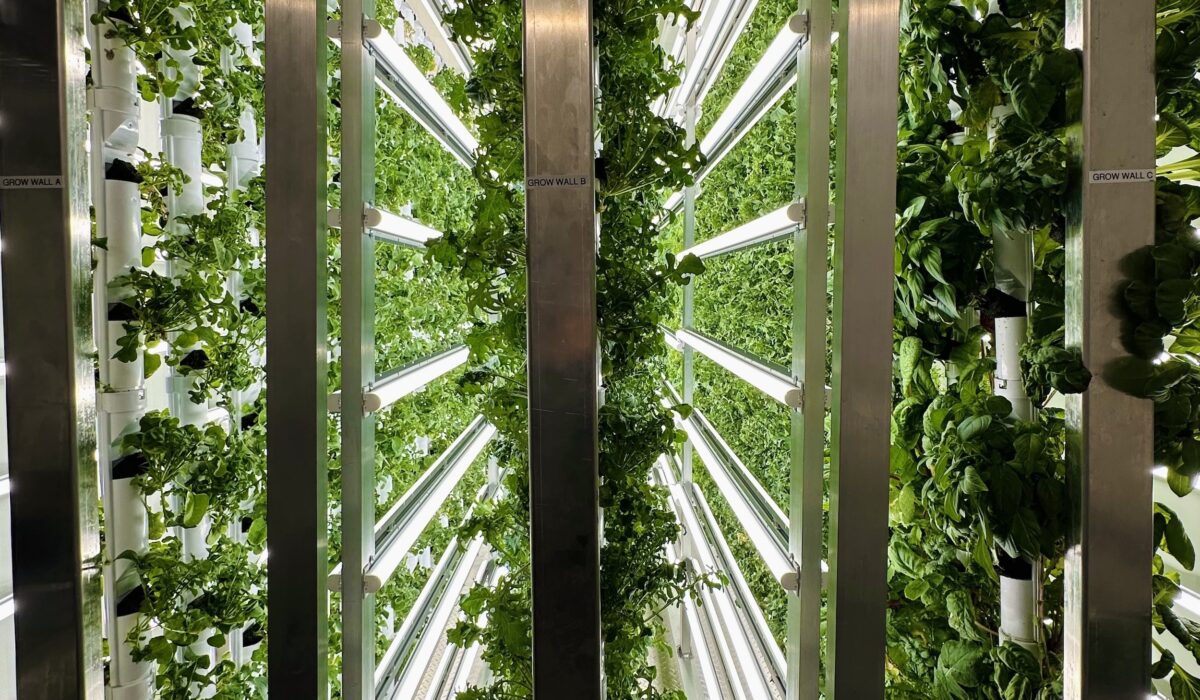
Built on controlled-environment agriculture (CEA) principles, the plug-and-play systems enable growers to cultivate fresh, nutrient-dense crops year-round regardless of climate, season or location. And because container farms operate within a fully insulated, self-contained footprint, they integrate easily into almost any setting from urban corridors to remote locations.

One of the biggest advantages of containerized CEA is its broad adaptability across industries (see the Use Cases page on this website). In the hospitality sector, chefs and food-and-beverage directors appreciate the ability to source hyper-local greens and specialty ingredients just steps from their kitchens. Farm-to-table dining becomes more than a buzzword; it becomes an operational reality that improves flavor, consistency and menu innovation. Hotels and resorts with high guest turnover also find value in the reliability of on-site production, especially in areas where distribution networks are inconsistent.

In the grocery and retail world, container farms play a role in strengthening supply continuity, ensuring freshness and elevating the customer experience. Retailers can supplement existing produce sets with crops grown on location, reducing shrink while highlighting their commitment to freshness and sustainability. Some even integrate farms into their marketing strategy, offering store tours and educational programming that reinforces brand trust. For smaller community grocers and food co-ops, container farms provide both the wholesale growers and the stores themselves with a competitive edge by enabling them to carry premium local produce year-round.

The education and healthcare markets are also rapidly adopting CEA technology as well, and for good reason. Schools, universities and workforce-training programs use container farms as living laboratories, giving students hands-on experience with hydroponics, automation systems and environmental controls. Healthcare systems, senior-living communities and rehabilitation centers leverage the technology to ensure consistent access to clean, pesticide-free produce, often linking fresh food to wellness, dietary therapy and preventative-care initiatives. In both verticals, the farms become tools not just for production but for experiential learning and healthier living.

Of course, container farms are gaining traction in agriculture, corporate sustainability and decentralized food-access initiatives. Farmers are diversifying their operations with year-round specialty crops while corporations integrate farms into ESG strategies to reduce their carbon footprint and support local communities. Nonprofits, municipalities and tribal nations deploy container farms to address food insecurity by bringing high-quality produce directly to underserved areas. Across all these markets the versatility of modular CEA systems continues to redefine what’s possible in modern food production. And we’re only at the beginning.

Tooth & Gill Mushroom Co. Now Certified Organic

A Pagosa Springs-based small business that uses a controlled-climate container farm to grow culinary and functional mushrooms is now certified organic.

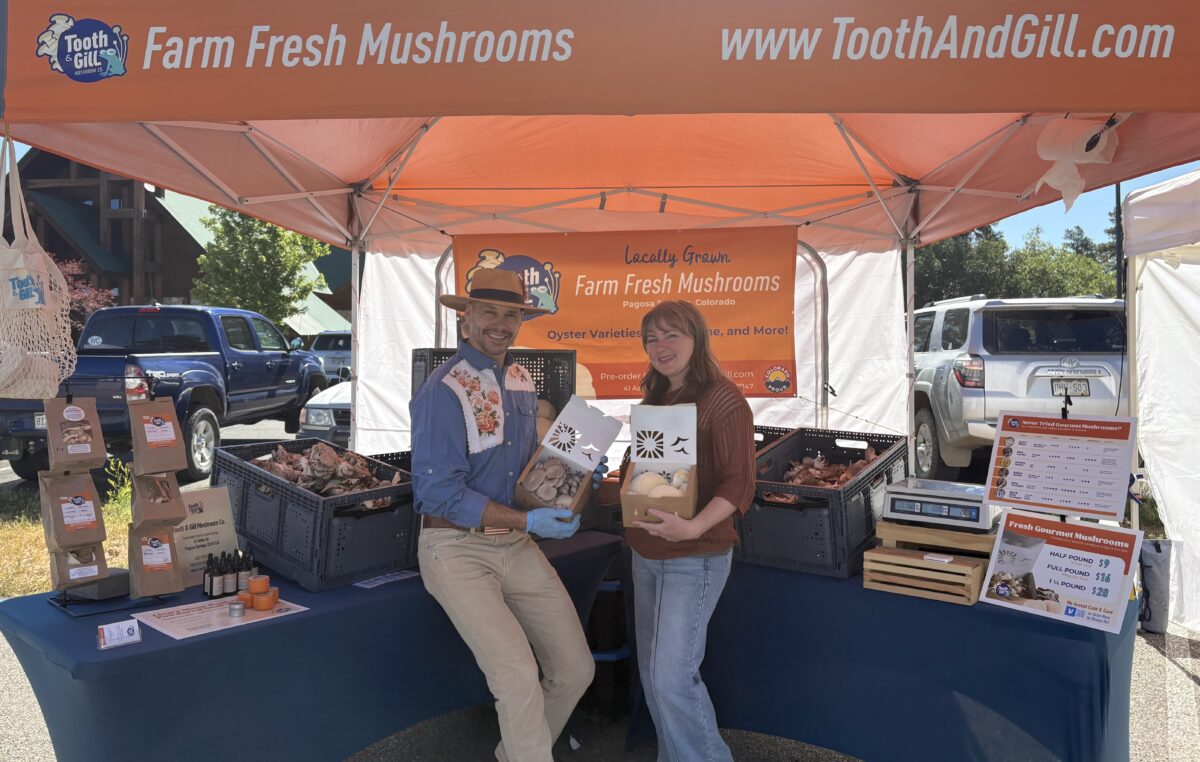
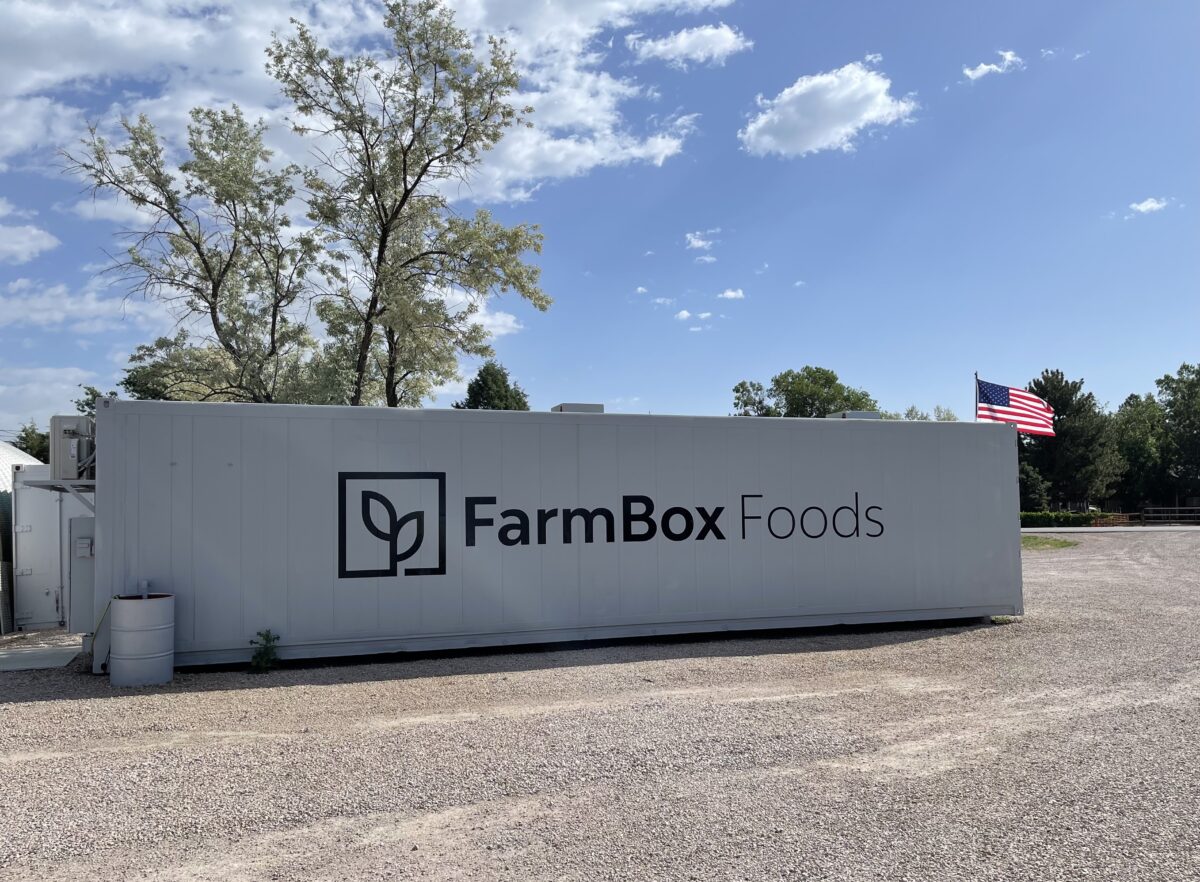
Behind the Tooth & Gill Mushroom Co. brand is husband-and-wife team Aaron Carter and Lauren Hawksworth, both of whom left the corporate world to pursue their passion for improving community access to healthy food in the form of gourmet mushrooms. These particular mushrooms are grown entirely in the confines of an insulated, tech-assisted shipping container farm built by Colorado-based FarmBox Foods.

Tooth & Gill Mushroom Co. launched last year and has made quite an impression through consumer-facing pop-ups, deliveries, farmers markets in Pagosa Springs and Bayfield, and food hubs like Terra Walk Farm and Valley Roots Food Hub. It has also forged partnerships with local restaurants (Meander, a New York Times-recognized farm-to-table destination; Keyah Grande’s Beyond the Gates, and Wild Finch, a new restaurant led by chef Daya Myers at The Springs Resort).

“It’s about local food systems, and people are starting to show interest in rebuilding those,” Lauren said. “We see it here in our community, which is really cool.”

Now being officially certified as organic enables Tooth & Gill to get on the shelves of local grocery stores. As interest in where food comes from and support for local farmers grows, there are opportunities for independently owned enterprises to fulfill the demand and help educate the public about the many health benefits of mushrooms. Lauren began incorporating mushrooms into her diet in her mid-20s and leaned heavily on lion’s mane mushrooms during her recovery from severe heatstroke a few years ago. For Aaron, the foray into container farming is a return of sorts to his family’s agricultural roots in Nebraska.

Due to the climatic and capital challenges associated with starting a traditional farm in the mountains, the founders of Tooth & Gill discovered FarmBox Foods and realized the shipping container model gave them a path forward to growing sustainably year-round in a rugged region where farming isn’t typically viable. They were drawn to mushrooms while exploring holistic and functional ways to heal and saw how underutilized gourmet mushrooms are as a wellness food.

In addition to a variety of fresh mushrooms, Tooth & Gill recently created its own line of powder extracts and dehydrated mushrooms (available via online order). Lauren’s career was in marketing for a supplement company, and there’s been a noticeable change in approach over the years.

“Wellness has shifted. People want to take care of themselves, but you also want to treat yourself. It has to taste good,” she said.

With that in mind, Tooth & Gill has a collection of recipes on its website that incorporate mushrooms into everyday dishes. To learn more about Tooth & Gill or to schedule an interview with the owners, send an email to hello@toothngill.com or call 602-828-8153. If you own or manage a store and want their products on your shelves, use the above contact information to reach out.

Vote for the Vertical Hydroponic Farm as the ‘Coolest Thing Made in Colorado’

Voting Opens for the Coolest Thing Made in Colorado “People’s Choice” Award

DENVER – Online voting opened today for the Colorado Chamber’s Coolest Thing Made in Colorado People’s Choice award (edit: voting concluded on Oct.. 6, 2025). The fourth annual contest celebrates the vibrant and diverse manufacturing industry across the state.

“The People’s Choice award is one of the most exciting parts of this contest as it gives Coloradans the chance to support their favorite products from local businesses across the state,” said Colorado Chamber President and CEO Loren Furman. “These finalists showcase the creativity and innovation happening in Colorado, and we’re excited to see which product will stand out as this year’s People’s Choice!”

FarmBox Foods’ Vertical Hydroponic Farm was named as a top-10 finalist last month.

“Southwest is proud to champion the People’s Choice at Coolest Thing Made in Colorado, honoring innovation and celebrating the best of Colorado’s businesses and communities,” said Lexi Muller, senior regional manager of corporate responsibility at Southwest Airlines, the People’s Choice sponsor.

Voters can select up to three of their favorite products from the top 10 finalists list for the Coolest Thing Made in Colorado. Individuals can vote once per day until voting closes on October 6. The Colorado Chamber will announce winners of both the People’s Choice award and the Coolest Thing Made in Colorado top winner on Oct. 23 at the Coolest Thing Made Awards Banquet.

Voting is open now through October 6. Votes can be cast on the Coolest Thing Made in Colorado website here: https://coolestthingcolorado.com/peoples-choice.

The Colorado Chamber’s Coolest Thing Made in Colorado contest is presented by FirstBank, and the People’s Choice Award is sponsored by Southwest Airlines.

Watch the Chamber’s promotional video featuring all 10 finalists for the People’s Choice award here.

Container Farming a Fulfilling Option for Retirees and Military Vets

The modern-day adage says that most people switch careers approximately 5 times in their life. Maybe you’re perfectly fine with your current job, but it feels like you’ve hit a ceiling. Or maybe the spark just isn’t there anymore, and the work that once kept you engaged doesn’t interest you the way it used to. That’s when the idea of trying something completely different starts to sound appealing—stepping into a new role, learning new skills and finding fresh energy in a new career path.

Farming inside a controlled-climate shipping container is increasingly seen as an attractive business option for retirees, military veterans and individuals seeking a fresh start in their careers. Unlike traditional farming, which often demands backbreaking labor, large tracts of land and a willingness to gamble with unpredictable weather, container farming offers a streamlined, modern alternative that lowers the barriers to entry (especially financially) and creates opportunities for people at different stages of life. a man wearing latex gloves on his hands is handling a head of lettuce

For retirees, container farming provides a way to stay active, socially engaged and purpose-focused without overextending physically or financially. Many retirees crave a second act that balances meaningful contribution with flexibility, and operating a container farm offers exactly that. Because the system is automated and climate-controlled, retirees can manage their farms with part-time effort—often just a few hours each day—while producing something tangible and beneficial for their community. It’s also a potential legacy project, something that can be passed on to children or grandchildren (learn about a FarmBox customer in Nebraska who decided to start a family-run farming business in 2023).

For military veterans, container farming offers both structure and mission. Veterans are well-suited for this kind of work because they’re trained in logistics, operations and discipline, all skills that directly translate to farming within a controlled environment. Many veterans also feel a deep desire to serve their communities after military service, and food production provides an outlet for that calling. Programs that connect veterans with farming often highlight the therapeutic benefits of working with plants and the pride that comes with producing food for others. Plus, reentering the normal workforce comes with its fair share of challenges. Container farms in particular offer an achievable path into agriculture without the steep startup costs of traditional farms.

For career changers, container farming is a pathway into entrepreneurship in a growing industry. Professionals who are leaving corporate jobs or shifting after economic changes often seek work that is more purposeful and personally fulfilling. A container farm offers flexibility, scalability and the ability to tie their new career to emerging trends in sustainability, local food and health. With demand for locally sourced produce continuing to rise among restaurants, schools, hospitals and consumers, container farmers are well-positioned to build profitable businesses while also making a social impact.

Ultimately, container farming blends technology, sustainability and community service into a business model that suits people seeking meaningful, manageable and future-oriented work. For retirees, it’s a way to stay vibrant. For veterans, it’s a new mission. For career changers, it’s a rewarding gateway into purposeful entrepreneurship.

Celebrating the Launch of FarmBox Foods Fresh

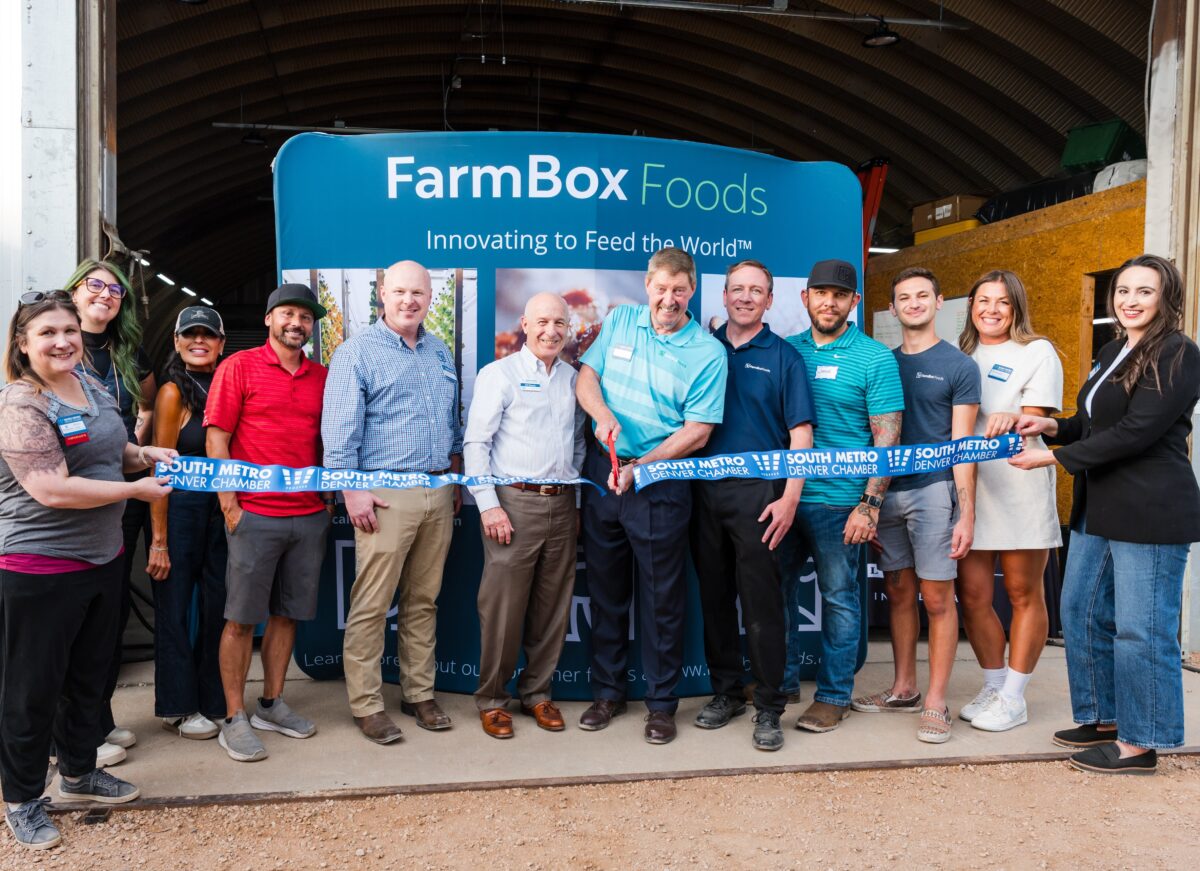
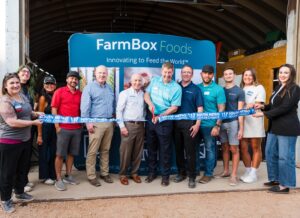
FarmBox Foods celebrated a ribbon-cutting event on Aug. 14 to mark the official launch of FarmBox Foods Fresh, a new subsidiary focused on producing high-quality, chef-grade gourmet mushrooms, greens and herbs for restaurants, chefs and home cooks in Colorado and beyond. The fresh produce is grown entirely in shipping container-based farms built by FarmBox Foods. FarmBox Foods leadership and staff cutting the ribbon for FarmBox Foods Fresh with colleagues from the South Denver Metro Chamber

Leaders from FarmBox Foods Fresh and the South Metro Denver Chamber of Commerce cut the ribbon to mark the occasion.

Operating out of its headquarters in Sedalia, Colo., FarmBox Foods Fresh offers a wide variety of flavorful, nutrient-rich mushrooms cultivated in a controlled-climate environment to ensure year-round availability and sustainability. Greens and herbs will soon be added to the menu. With regular weekly harvests and flexible pickup and delivery options available Monday through Friday, FarmBox Foods Fresh is redefining what it means to “eat local.”

“We’re excited to bring a new level of quality and consistency to Colorado’s fresh produce scene, especially mushrooms,” said Rusty Walker, CEO of FarmBox Foods. “This venture reflects our commitment to sustainable agriculture and our passion for providing access to healthy, locally grown food.”

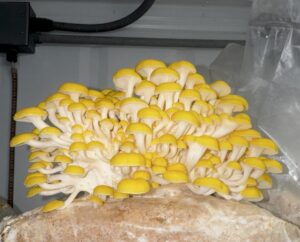
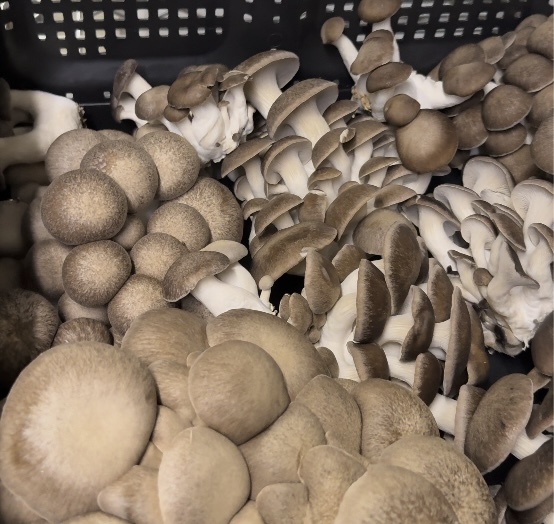
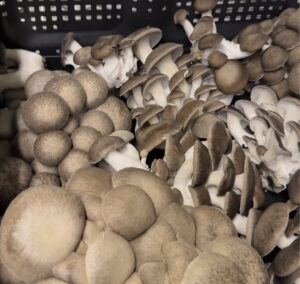
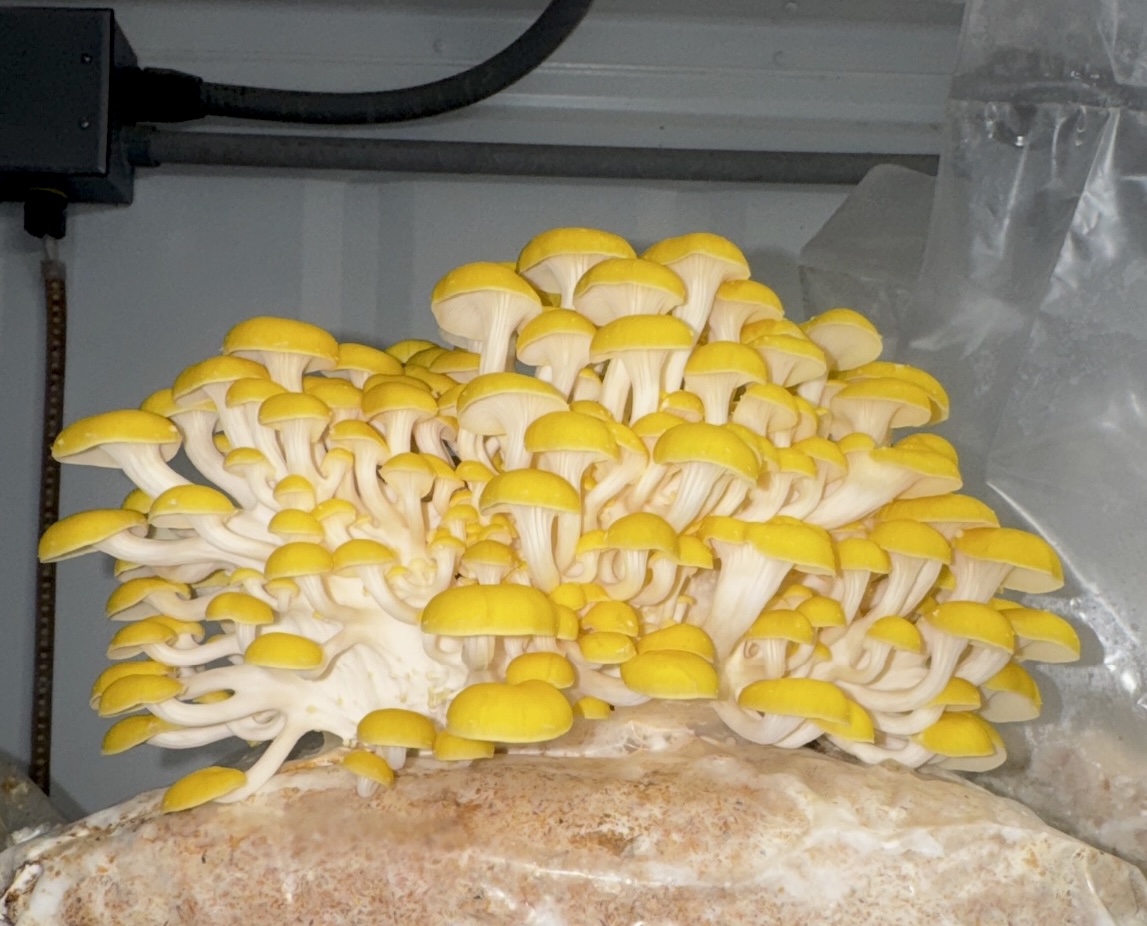
The current gourmet mushroom selection includes lion’s mane, blue oysters and black king trumpets. FarmBox Foods Fresh will soon offer even more gourmet mushrooms, including chestnut, golden oyster, king blue oyster, pink oyster, king trumpets and snow oyster varieties. Prices range from $7 to $12 per pound depending on quantity, and pre-orders are now being accepted for upcoming varieties.

Whether you’re a professional chef seeking unique ingredients or a home cook looking to elevate your meals, FarmBox Foods Fresh delivers mushrooms that are as beautiful as they are delicious.

FarmBox Foods Fresh

5389 Plum Ave.

Sedalia, CO 80135

303-285-4076

www.farmboxfoodsfresh.com

Vertical Hydroponic Farm in the Top 10 for Coolest Thing Made in Colorado

FarmBox Foods’ Vertical Hydroponic Farm was named among the top 10 finalists for this year’s Coolest Thing Made in Colorado competition put on by the Colorado Chamber. See the press release below!


FOR IMMEDIATE RELEASE

August 7, 2025

Contact: CynthiaE@cochamber.com


Top Ten Finalists for 2025 Coolest Thing Made in Colorado Contest Announced

DENVER – The Colorado Chamber of Commerce today announced the top ten finalists for its fourth annual Coolest Thing Made in Colorado competition sponsored by FirstBank.

“This year’s top ten finalists represent Colorado innovation in so many ways,” said Loren Furman, President and CEO of the Colorado Chamber of Commerce. “From breakthroughs in space technology to products that support our farmers, protect our environment, and celebrate our love for the outdoors, these finalists reflect what makes Colorado such a unique place to live and work. We’re proud to highlight these amazing companies and look forward to celebrating them in October.”

The finalists were chosen by an independent selection committee who reviewed and assessed each nomination. The finalists will be honored at the Colorado Chamber’s Coolest Thing Awards Banquet on October 23, where the 2025 winner will be announced and presented with the Coolest Thing Made in Colorado trophy. The Chamber will also announce special categories of winners, including a “People’s Choice” award based on an online voting tool that will launch in the coming weeks.

The Coolest Thing Made in Colorado top ten finalists are as follows:Coolest Thing Made in Colorado logo


AE.1 Cosmos by Lightship

The AE.1 Cosmos is the first all-electric aero-electric travel trailer with a 77 kilowatt-hour battery and rooftop solar panels that create a fully self-contained power system. Made in Broomfield, its aerodynamic design and TrekDrive assist system improve towing efficiency and provide up to a week of off-grid living, offering a quiet and low-maintenance option for travel.


AIEye by HapWare

AIEye is a wearable assistive technology that translates nonverbal communication cues such as facial expressions, gestures and body language into discreet haptic feedback for people who are blind, low vision or autistic. The device pairs smart glasses with an integrated camera and a wristband to detect over 25 visual social cues and translates them into distinct, intuitive vibration patterns on the wrist. Made in Golden, AIEye is built for real-world durability, speed and ease of use.


Austere Remediation Unit (ARU-10T) by Austere Environmental

The Austere Remediation Unit (ARU-10T) cleans 10 tons of diesel-contaminated soil per day, removing 99.99% of pollutants and recovering the diesel for reuse. Developed in Golden, Colorado, the system helps prevent water contamination, reduces greenhouse gas emissions, and keeps contaminated soil out of landfills, offering a cleaner and more sustainable solution for waste management.


Autonomous Nano Tractor (ANT) by Barn Owl Precision Agriculture

The Autonomous Nano Tractor (ANT) is a fully electric, self-driving mini tractor engineered in La Junta, Colorado, for small to midsize farms. It handles precision row-crop tasks like weeding, targeted spraying, and planting support, cutting manual labor by more than 50% and reducing input costs by about 30%. Its modular design and advanced computer vision make it a scalable, low-maintenance solution for both regenerative and conventional farms.


Clarity-1 by Albedo

Clarity-1, developed by Albedo in Broomfield, is the first commercial very-low-Earth-orbit (VELO) satellite to 10-centimeter visible imagery and 2-meter long-wave infrared data in a single pass. Launched in March 2025, it marks a breakthrough in multispectral imaging, providing unprecedented detail for applications from city planning to climate research.


Innovaflex Arrays by InnovaFlex Foundry

The InnovaFlex Arrays, manufactured in Colorado Springs, are complex electrical systems built on glass or flexible materials that enable the measurement or application of electrical signals. These arrays have multiple uses, including “Organ-on-a-Chip” applications that allow researchers to study how human tissue responds to pharmaceuticals or treatments, reducing the need for animal testing and supporting more personalized medical approaches.


Laser Maze Challenge by Funovation

The Laser Maze Challenge, manufactured in Longmont, is an interactive attraction where players navigate glowing laser beams, racing against time in three unique game modes that test agility, speed and strategy. With immersive lighting, video replays, and a live leaderboard, it delivers an action-packed experience for families, thrill-seekers and competitive gamers.


Spectra Optia Apheresis System by Terumo Blood and Cell Technologies

The Spectra Optia Apheresis System, developed in Lakewood, is an industry-leading platform for therapeutic apheresis, cell processing, and cell collection, capable of separating and returning blood components while targeting specific cells for treatment or research. First introduced in 2007, it’s now used in over 125 countries to support procedures for hematologic disorders, rare diseases and emerging cell therapies.


The Narwhals by Apex Cool Labs

Manufactured in Boulder, the Narwhals are portable cooling devices designed to quickly reduce core body temperature by targeting specialized vasculature in the palms. Used by professional athletes, firefighters, construction workers, and others exposed to extreme heat, Narwhals help improve heart rate recovery, extend work capacity and provide lasting relief from heat stress in demanding environments.


Vertical Hydroponic Farm by FarmBox Foods

The Vertical Hydroponic Farm, manufactured in Aurora, uses patented vertical farming technology inside upcycled shipping containers to maximize growing space while minimizing water and energy use. These solar-capable, climate-controlled farms enable year-round cultivation of mushrooms, leafy greens and herbs almost anywhere in the world.


Learn more about the Coolest Thing Made in Colorado contest at www.CoolestThingColorado.com


The Colorado Chamber of Commerce champions free enterprise, a healthy business environment and economic prosperity for all Coloradans. It is the only business association that works to improve the business climate for all sizes of business from a statewide, multi-industry perspective. What the Colorado Chamber accomplishes is good for all businesses, and that’s good for the state’s economy. It was created in 1965 based on the merger with the Colorado Manufacturers’ Association.

Consumer Health Trends Fuel Produce Innovation in Food Service

Recent insights shared in this article by The Packer highlight a powerful and increasingly pronounced shift in food service strategies: consumers’ growing demand for health-conscious eating is driving major innovation in fresh produce sales. Industry experts say this shift is reshaping menus, sourcing and packaging, expanding access and opening doors for CEA technologies.

Article highlights:

  • Health-forward menu items: Food service decision-makers are featuring produce in creative ways to satisfy consumers seeking nutrient-dense, plant‑based options.
  • Produce innovation: From novel cuts to new varieties and packaging formats, freshness and convenience are key themes.
  • Food service adapting: Chefs and operators are rethinking ingredient sourcing, menu flexibility and preparation efficiencies to meet evolving wellness expectations. Locally grown and locally purchased goods have gained more importance.

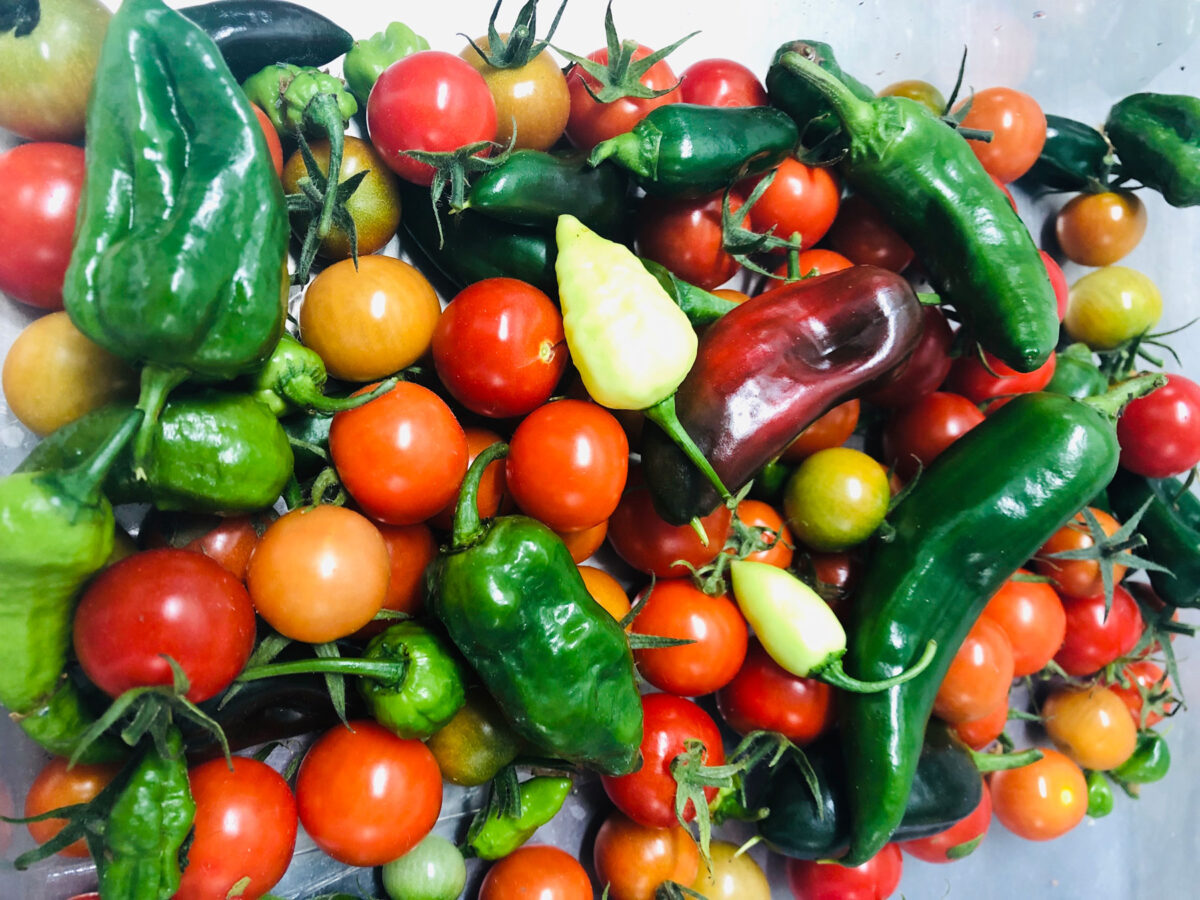
    Harvested veggies

Linking Trends to Controlled‑Environment Agriculture (CEA)

CEA (the indoor growing of fruits, vegetables and herbs using technologies like container farms, greenhouses and hydroponics) fits nicely into many of these emerging food service trends.

  1. Consistent Supply of High‑Quality, Nutrient‑Dense Produce

CEA enables year‑round production of crisp, nutrient‑retaining greens and microgreens, perfect for health‑centric operators who want predictable quality and availability.

  1. Novel Varieties & Flavor Innovation

CEA allows experimentation with niche and specialty varieties (e.g. colorful lettuces, edible flowers, herb hybrids) that stand out on menus — exactly the kind of produce innovation operators are seeking.

  1. Traceability & Transparency

Foodservice customers increasingly value knowing where their produce comes from and how it’s grown. CEA offers strong control over environmental parameters, traceable growing records, and often lower pesticide use—aligning with clean‑label preferences.

  1. Local Proximity & Sustainability

Urban vertical farms and greenhouse operations close to metro centers reduce transportation times dramatically, delivering fresher product with a smaller carbon footprint. Operators can highlight “locally grown, indoor‑grown, and pesticide-free” produce as a differentiator.

  1. Packaging & Shelf‑Life Benefits

Plants grown in optimized indoor settings often require less handling and damage, enabling minimal packaging solutions. Freshness and extended shelf life translate to less waste for food service operators.

  1. Menu Innovation & Customization

With controlled environments, growers can produce micro‑batches of specialty herbs or leafy greens on demand. Chefs benefit from flexible supply and can experiment with new ingredients or shareable formats tailored to health‑oriented menus.

What This Means for Foodservice Operators

         Food Service Challenge                 CEA Advantage
Unpredictable seasonal supply Consistent year‑round production
Desire for unique, fresh items Grow custom varieties and formats
Need for transparency and cleanliness Controlled inputs, reduced chemical use
Consumer preference for local Urban CEA provides nearby sourcing
High perishability & waste Longer shelf life, less bruising

By embracing CEA partnerships, food service brands can scale their innovation, deliver fresh, local, health‑optimized greens and produce, and respond nimbly to menu trends while enhancing supply chain reliability and sustainability.

Final Takeaway

The health-driven trends highlighted by The Packer signal a moment of transformation in produce strategy across foodservice. Operators eager to lead in the wellness and convenience space will find fertile ground in controlled-environment agriculture, leveraging its precision, consistency and foundations in sustainability to meet consumer demand for fresh, healthy and innovative produce.

Moving Forward: FarmBox Foods Supports Projects Affected by Freight Farms’ Closure

The recent closure of Freight Farms has created a ripple effect across the controlled-environment agriculture (CEA) industry, leaving many projects stalled and uncertain about their future. We’ve heard from people across multiple industries who are looking for help getting their projects back on track.

We understand the challenges this unexpected news has brought to communities, institutions and entrepreneurs who were preparing to implement or expand sustainable farming solutions. We want you to know that you are not alone, that there is a path forward.

As a pioneer and trusted manufacturer of high-quality, controlled-climate container farms, FarmBox Foods is uniquely positioned to step in and help. With several years of experience building advanced container farms and supporting operations around the world, we have the infrastructure, expertise and team in place to get planned projects back up and running in a quick and efficient manner.

Our diverse line of modular, turnkey farms — including hydroponic, mushroom and fodder farms — are designed for resilience, efficiency and adaptability in any location. Whether your project was slated for a school, a resort, a nonprofit, a business park, a zoo, or a remote community, we can help you transition smoothly with a system that meets (and even exceeds) your original goals. We’re committed to maintaining project momentum and avoiding costly delays.

FarmBox Foods offers more than just hardware. We provide comprehensive support, from training and installation to ongoing farm management assistance and remote monitoring. We know firsthand that the success of a container farm depends on more than just technology — it requires reliable support and a shared commitment to growing fresh, local food sustainably. Our team takes that commitment seriously and has since our inception.

If you or your organization were planning to work with Freight Farms and now find yourself seeking an alternative, we encourage you to reach out via our web form or info@farmboxfoods.com. We’ll review your original plans, timelines and objectives, and work alongside you to provide a tailored path forward using FarmBox Foods technology. We aim to make the transition as seamless and productive as possible so you can focus on feeding your community and meeting your mission.

This is a pivotal moment in the evolution of controlled-environment agriculture. While change is never easy, it’s often an opportunity to build something even stronger. We at FarmBox Foods are excited to work with new partners who share our vision for resilient food systems and long-term sustainability. Let’s move forward — together.

Please contact us today to learn how we can support your project and keep your vision alive. The world needs more local food production, not less, and we’re here to help you grow and succeed.

From Our Farm to Your Fork: Explore FarmBox Foods Fresh!

Introducing FarmBox Foods Fresh: Gourmet Mushrooms Grown Locally in Sedalia

FarmBox Foods is thrilled to announce the official launch of FarmBox Foods Fresh, a new subsidiary dedicated to cultivating high-quality, chef-grade gourmet mushrooms right here in Sedalia, Colorado. With weekly harvests and an unwavering commitment to freshness and sustainability, FarmBox Foods Fresh is redefining what it means to eat locally.

Black king trumpet mushrooms

From restaurants looking for unique ingredients to food lovers seeking fresh flavors, FarmBox Foods Fresh offers a delicious variety of mushrooms that are grown with care and precision. These gourmet mushrooms are harvested throughout the week and are available for both pick-up and delivery, Monday through Friday.

Now Available: A Flavorful Assortment

Our current June harvest includes a colorful selection of gourmet mushrooms:

  • Blue Oyster – $9/lb (5-10 lbs), $8/lb (11-20 lbs), $7/lb (21+ lbs)
  • Black King Trumpets – $9/lb (5-10 lbs), $8/lb (11-20 lbs), $7/lb (21+ lbs)
  • Lion’s Mane – $12/lb (5-20 lbs), $10/lb (21+ lbs)

Coming Soon

  • Chestnut – $10/lb (5-10 lbs), $9/lb (11-20 lbs), $8/lb (21+ lbs)
  • Golden Oyster – $9/lb (5-10 lbs), $8/lb (11-20 lbs), $7/lb (21+ lbs)
  • King Blue Oyster – $10/lb (5-10 lbs), $9/lb (11+ lbs)
  • Pink Oyster – $9/lb (5-10 lbs), $8/lb (11-20 lbs), $7/lb (21+ lbs)
  • King Trumpets – $12/lb (5-10 lbs), $10/lb (11+ lbs)
  • Snow Oyster – $9/lb (5-10 lbs), $8/lb (11-20 lbs), $7/lb (21+ lbs)

Whether you’re a chef sourcing premium mushrooms for culinary creations or a home cook on the hunt for nutrient-rich, flavorful ingredients, these mushrooms are as versatile as they are visually stunning.

Exciting new varieties are also in the works, with pre-orders now being accepted. Keep an eye on our website for updates as we expand our offerings.

Visit or Contact Us

Located at 5389 Plum Ave, Sedalia, CO 80135, FarmBox Foods Fresh offers convenient pick-up and delivery options to make fresh, local food more accessible. For ordering, questions, or pre-orders, reach out to us:

📧 sedalia@farmboxfoods.com
📞 (303) 285-4076
🌐 farmboxfoodsfresh.com

To learn more about each mushroom’s flavor profile and recommended culinary uses, visit our website and explore how FarmBox Foods Fresh is bringing gourmet fungi to your table — fresh from Sedalia.

Moving the Needle on Hunger, One Container at a Time

Food production is undergoing a radical transformation, with controlled-climate farming in shipping containers emerging as an innovative solution for age-old challenges.

This method involves growing crops inside repurposed shipping containers equipped with advanced climate control, hydroponic systems and LED lighting. By creating a fully controllable environment, farmers can optimize conditions for year-round cultivation, regardless of weather patterns or geographical location. As traditional farming faces mounting challenges such as climate change, soil degradation and unpredictable weather events, container farming presents a promising alternative that can boost food security and enhance agricultural resilience for communities around the world. And FarmBox Foods is here for it.

“We really do have a unique opportunity to move the needle in a positive direction, and tackle these struggles that people have faced for generations,” said Rusty Walker, CEO of FarmBox Foods, a Colorado-based manufacturer that also supports customers in their growing. “Putting ag technology into the hands of people who want to make a difference in their community has an exponential benefit that lifts people up in ways that we couldn’t have imagined when this company was starting out.”

One of the key advantages of controlled-climate farming is its efficient use of resources. Unlike traditional agriculture, which requires vast amounts of land and water, container farms can operate in urban spaces or areas typically unsuitable for farming. These systems use up to 95% less water than conventional methods and do not rely on harmful pesticides or fertilizers, making them more environmentally sustainable. The vertical stacking of crops within containers maximizes space efficiency, allowing farmers to produce large yields in small areas. This efficiency is particularly valuable as urban populations continue to grow, increasing the demand for fresh, locally sourced food.

Another transformative aspect of container farming is its ability to decentralize food production. Bringing farms closer to consumers reduces the need for long-distance transportation, thereby minimizing carbon emissions and food spoilage. Communities in food deserts — areas with limited access to fresh produce — can benefit immensely from the presence of container farms, which offer a reliable and consistent supply of nutritious food. This localized approach not only supports regional food systems but also strengthens community resilience during supply chain disruptions.

Looking ahead, the wide-scale integration of smart technologies will further enhance the impact of container farming. Innovations in data analytics, artificial intelligence and automation will allow farmers to monitor and adjust growing conditions in real-time, optimizing yields and reducing operational costs. As more companies, municipalities and nonprofits invest in and adopt these advanced systems, container farming has the potential to become a cornerstone of sustainable food production, reshaping how we think about agriculture and our connection to the food we consume. Through adaptability, efficiency and innovation, this food production model offers a scalable solution to feeding a growing global population while at the same time protecting the planet’s precious resources.


—    —   —


Greenhouse alternatives, functional mushroom growing, mushroom tincture, vegetable farming unit, mushroom growing system, mushroom grow box, organic food production, stranded oil and gas asset usage, uses for flare gas, Conex growing container, zoo food production, grow your own feed, barley for grassfed beef, Wagyu cattle feed, how to spend esser funds, grow your own feed, cattle feed production, barley grass chicken feed, growing livestock fodder, barley grass production, off-grid farming, tree propagation, how to grow tree seedlings, DIY mushrooms, starting a farm, how to start hydroponic growing, how to start growing mushrooms, container startup business, solutions to food deserts, island agriculture practices, sustainable food production on islands, small-scale farming in island communities, resilient food systems for islands, island permaculture initiatives, hydroponics in island farming, local food sourcing on islands, sustainable urban agriculture, vertical farming techniques, small space farming ideas, urban homesteading practices, indoor farming innovations, container gardening in a city, hydroponic systems for urban farms, sustainable agriculture, water-efficient farming, eco-friendly farm, sustainable food production, organic farming for sustainability, and climate-smart agricultural practices