What makes FarmBox Foods a green-oriented company?
What is influencing the increase in food prices and what can be done about it?
A confluence of global events and circumstances have some experts painting a grim picture for populations that already face food insecurity.
Recent spikes in food, fuel and fertilizer prices could lead to “destabilization, starvation and mass migration on an unprecedented scale,” said David Beasley, head of the U.N. World Food Program.
A recent U.N. analysis shows that “a record 345 million acutely hungry people are marching to the brink of starvation.” That’s a 25-percent increase from 276 million at the start of 2022, before Russia invaded Ukraine in late February. The number stood at 135 million people before the COVID-19 pandemic in early 2020, according to an ABC News article.
The war in Ukraine is having a continuing ripple effect on the global food supply. Russia and Ukraine together export 28 percent of fertilizers made from nitrogen, phosphorous and potassium, according to Morgan Stanley. The limited global supply has sent prices into the stratosphere — in some cases doubling the cost — and there are fears that high costs or the lack of availability will result in farmers using less fertilizer, leading to lower yields of commodities that are already constrained.
In early July, the Consumer Price Index report from the Bureau of Labor Statistics said that food prices in the U.S. increased 10.4 percent from June 2021 to June 2022.
Rising costs for any critical ingredient for running a farm — water, labor, fuel or fertilizer — translate to higher food prices. And when all four hit at the same time, disruption ensues, to the detriment of consumers, especially those who were already hanging on by a thread.
In all, worldwide experts fear crop yields will drop by 10-30 percent, and developing countries will be hardest hit.
The prevalence of “undernourishment” — when food consumption is insufficient to maintain an active and healthy life — continued to rise in 2021. The U.N.-commissioned report, “The State of Food Security and Nutrition in the World,” estimates that between 702 million and 828 million people faced hunger last year.
A grain shortage stemming from the Ukraine conflict is also driving up the cost of basic foods and other commodities, and corn and wheat are not getting out to the market because the Black Sea is closed. To top it off, drought conditions are crippling agricultural operations in several regions known for high output.
There’s a dearth of issues to navigate. But as The Shelby Report points out, crises stoke innovation. Agricultural adaptation is being employed, including the use of hydroponic container farms housed in upcycled shipping containers. The controlled-climate farms allow for uninterrupted, decentralized growing year-round and provide a stable environment to ensure reliable yields. Smart irrigation systems are being used more than ever, and data is driving decision-making at unprecedented levels in order to maximize available resources. Responses to climate change vary by location and commodity. Learn more about how the USDA is assisting food producers.
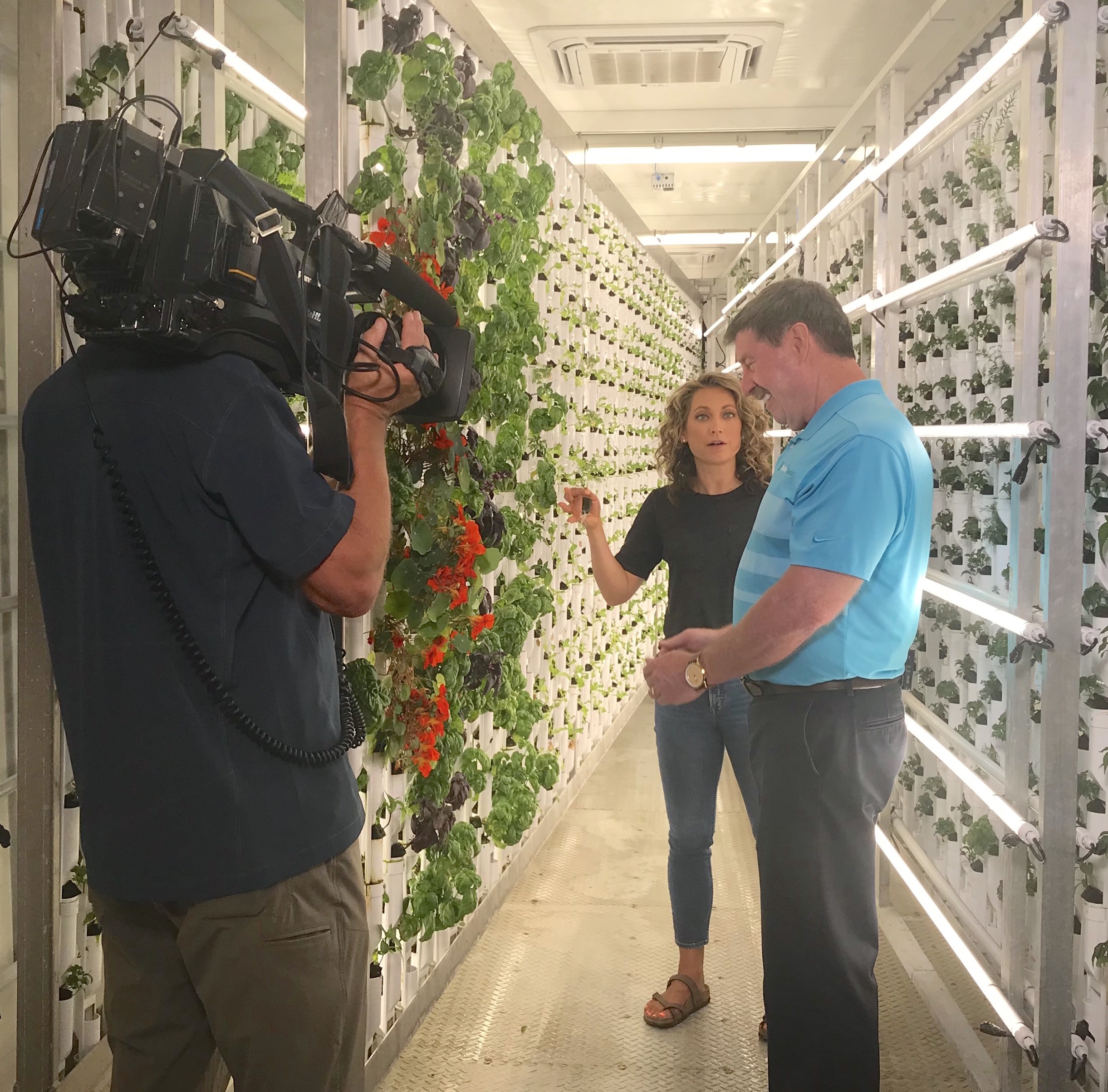
Good Morning America visited FarmBox Foods’ headquarters to explain how businesses and nonprofits are using technology to sustainably grow food near the consumer year-round.
Good Morning America visited FarmBox Foods’ headquarters to learn how businesses and nonprofits are using technology to sustainably grow food near the consumer.
ABC News Chief Meteorologist Ginger Zee spoke to FarmBox Foods CEO Rusty Walker June 20 about the company’s mission to build high-tech indoor farms that provide food security year-round for those without reliable access to nutrient-dense food.
(Watch the GMA appearance here)
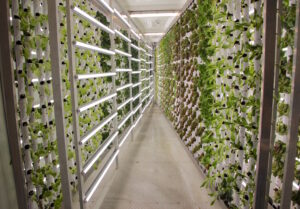
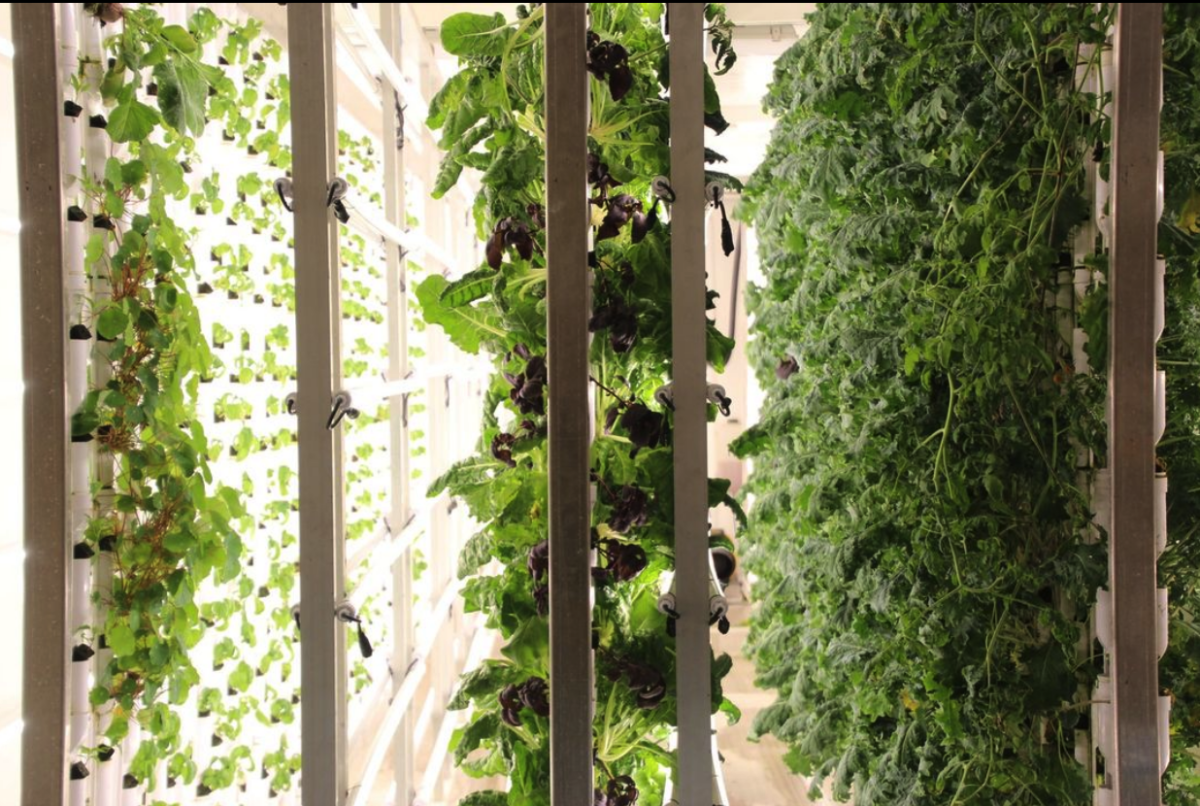
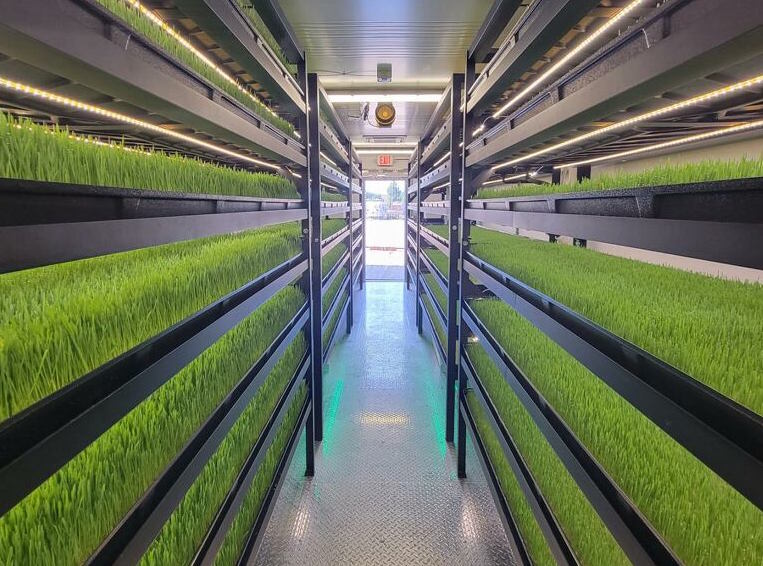
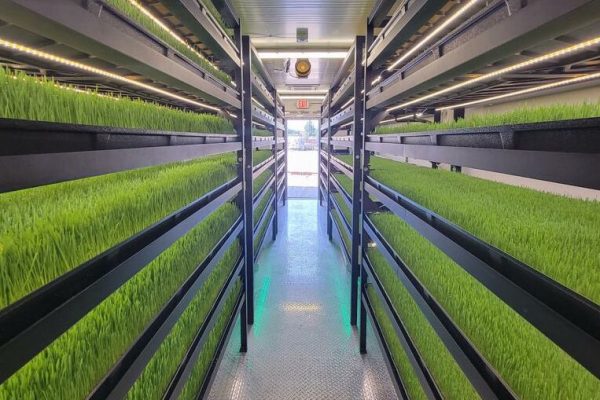
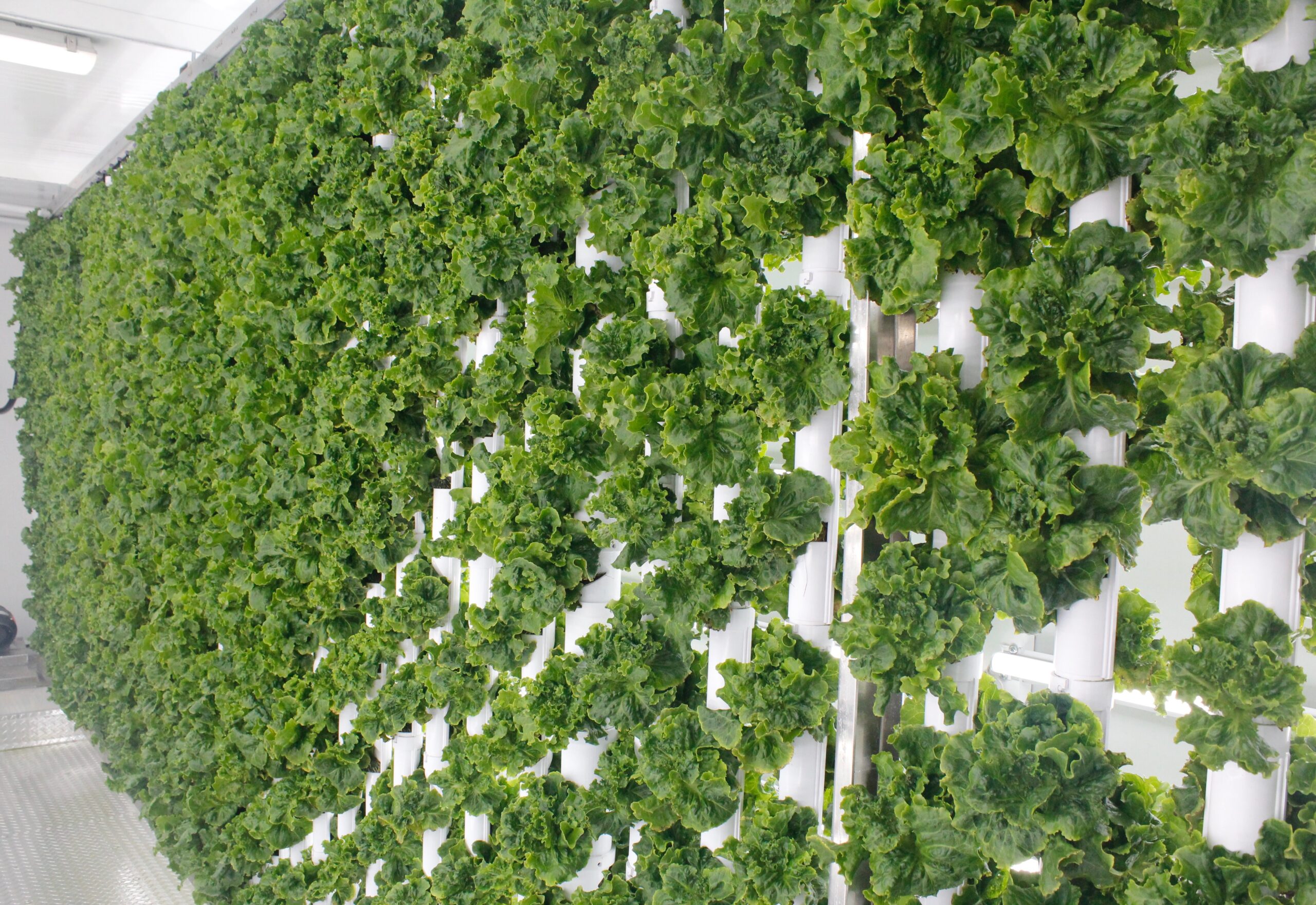
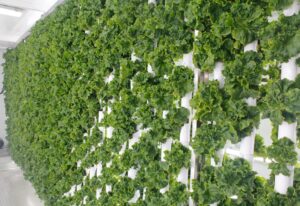
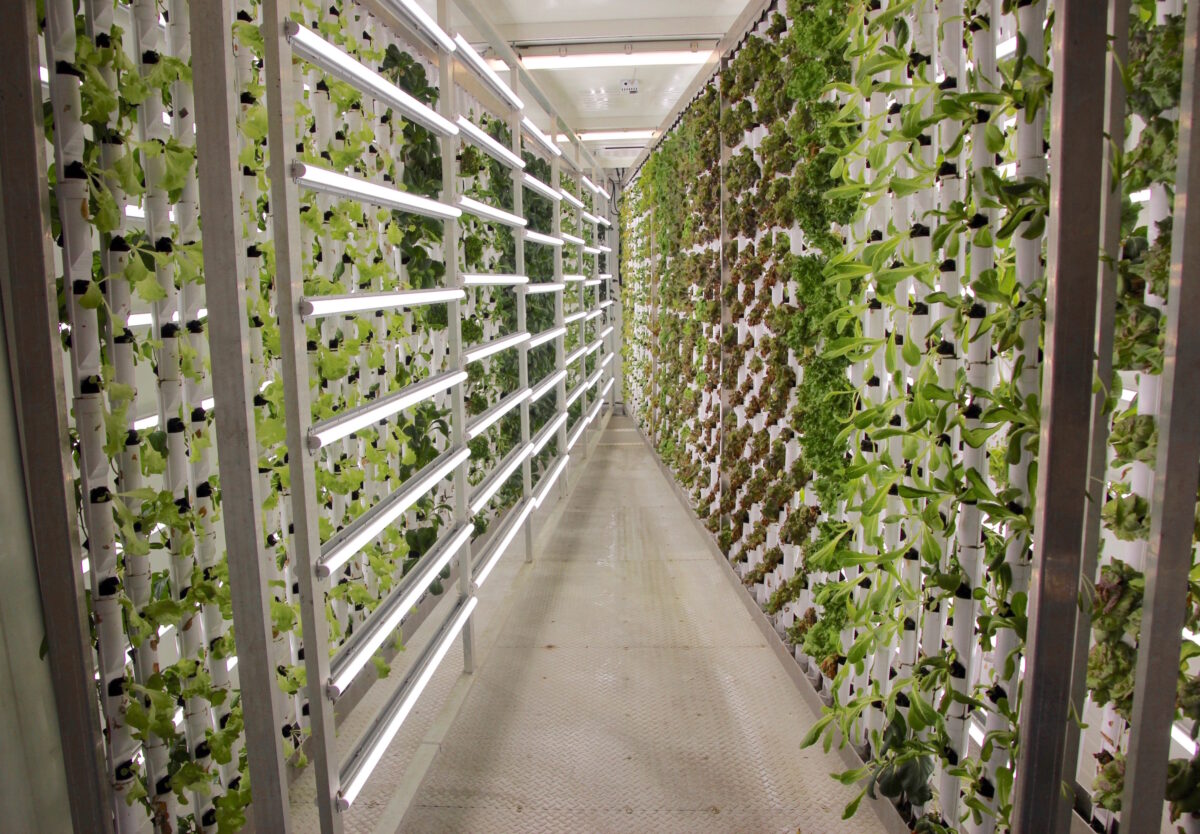
Zee also interviewed representatives from two FarmBox Foods customers, Natural Grocers® and Centura Health, about their use of Vertical Hydroponic Farms, which provide a hyperlocal source of fresh produce while reducing environmental impacts and unpredictability associated with traditional farming. The farms are housed inside upcycled, insulated shipping containers that are outfitted with plumbing, electrical and sensors to control conditions inside.
By growing food on site, the companies that use FarmBoxes are avoiding supply chain disruptions, reducing food sourcing costs, improving access, and helping to eliminate food waste because the veggies get to the plate much quicker.
The controlled-climate container farms provide a perfect growing environment for the plants and shield them from weather and climate impacts, including drought, heat waves and flooding.
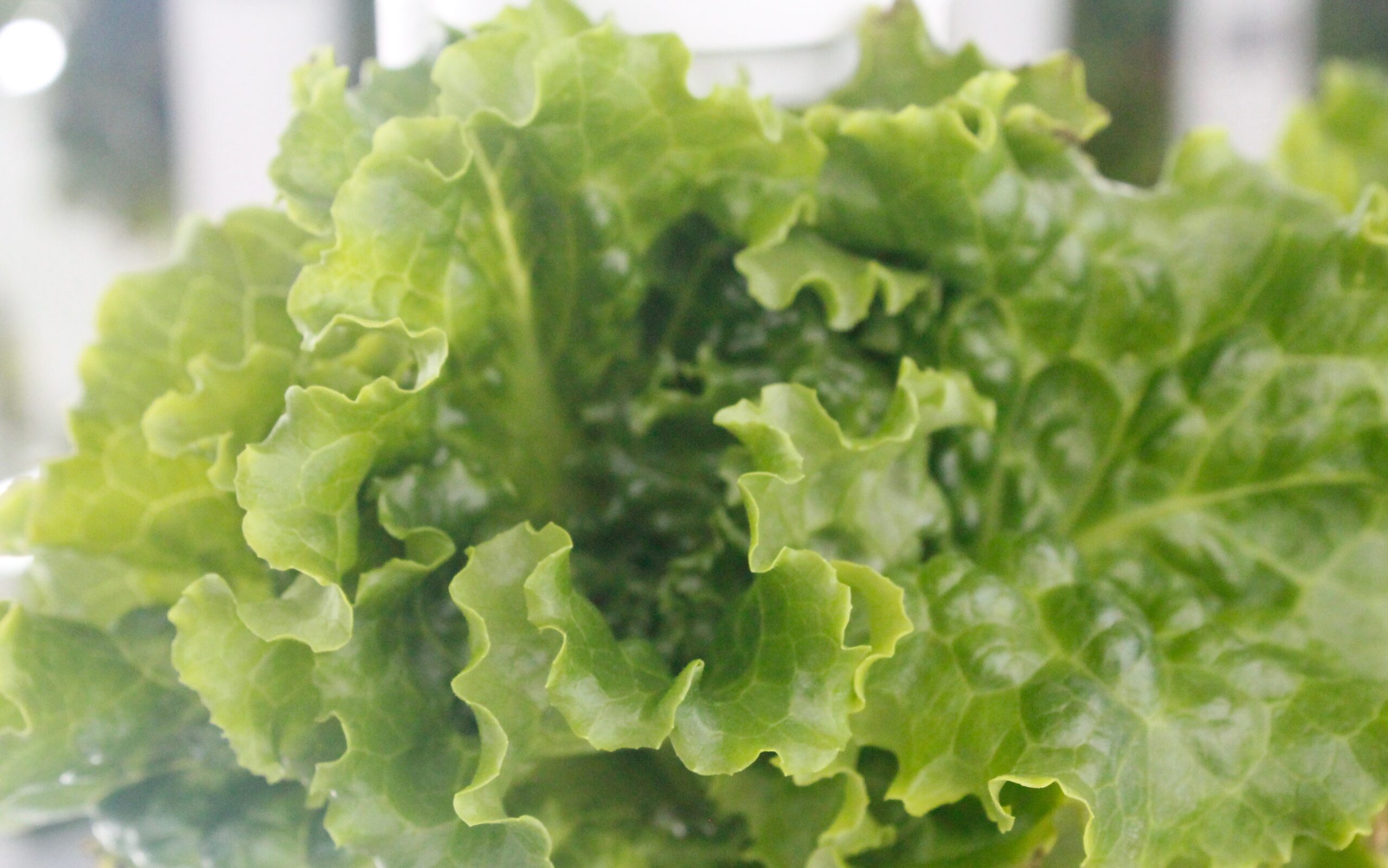
Natural Grocers is growing organic lettuce behind its store in Lakewood, Colo., mere steps from the display case, and plans to expand the program elsewhere. Centura Health, meanwhile, owns three Vertical Hydroponic Farms and uses them to produce food for hospital patients and visitors, and to provide nutritious produce to food banks in the communities they serve.
Every consumer knows that sticker shock at the grocery store is now a common occurrence.
Food price increases this year are expected to far exceed those observed in 2020 and 2021, according to the USDA’s Economic Research Service.
Every consumer knows that sticker shock at the grocery store is now a common occurrence.
Food price increases this year are expected to far exceed those observed in 2020 and 2021, according to the USDA’s Economic Research Service.
Supply chain delays caused by, among other things, pandemic-related shutdowns, a truck driver shortage and a logjam at our nation’s ports were already causing issues with the U.S. food supply. Then, Russia’s invasion of Ukraine caused a ripple effect that we still see playing out globally. It has impacted fuel prices, food exports and the supply of fertilizer needed to maintain food production levels in places like Brazil, a top producer of goods like sugar and soybeans. Even avian flu is affecting the price of eggs and poultry.
The Consumer Price Index for all food in the U.S. increased 1 percent from March 2022 to April 2022, and food prices were 9.4 percent higher than in April 2021.
It’s an inescapable phenomenon that’s disproportionately affecting those who were already struggling to feed their families. So when will it end? There are, of course, differing opinions on when or even if food prices will level out anytime soon.
The cost of fresh vegetables is expected to go up by 4.3 percent this year, the USDA says, a point that underscores the need to decentralize the production of certain veggies. Hyperlocal production of nutrient-dense food can help control costs, primarily because it eliminates fuel price fluctuations and supply chain delays from the equation. It also helps reduce the rate of food loss, because the veggies make their way to the fridges and plates of consumers much more quickly.
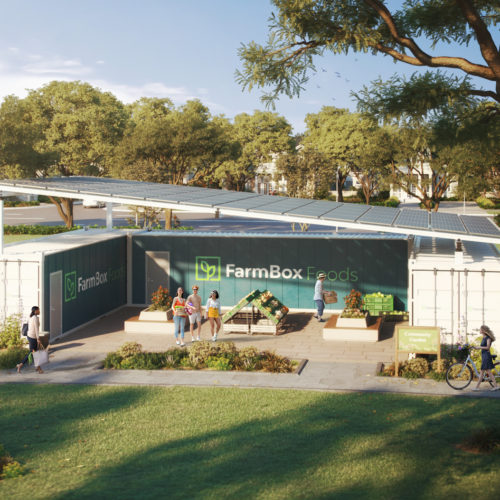
Having a localized level of control takes the power away from negative external influences, and places the power back in the hands of urban farmers, who can nimbly grow at scale using a combination of greenhouses, outdoor community gardens and containerized, tech-assisted farms. A container farm takes up 320 square-feet of space — or about 5 parking spaces — and can be placed anywhere there’s a reliable water supply and an electrical hookup.
Businesses that serve underprivileged communities can come together in the name of food security and provide these food production systems that operate in perpetuity and provide jobs and educational opportunities in the process. Although veggies comprise only a portion of the food consumed in America, it’s incremental changes like this that can move the needle in a direction that eases the burden on consumers.
FarmBox Foods has established a set of core values to guide existing and future relationships, and created a tagline that captures the company’s focus on innovation.
FarmBox Foods, a Colorado-based manufacturer of high-tech container farms, has spent the last four years developing proof of concept in multiple industries by helping people grow gourmet mushrooms, leafy greens, culinary herbs, peppers, small tomatoes and trees. The mission-driven company is focused on helping partners feed those living in food deserts while empowering local communities and providing jobs and educational opportunities.
The new slogan, “Farm Anywhere,” encapsulates in two words what the tech-driven farms allow users to do, and the new tagline, “Innovating to Feed the World,” captures the spirit of FarmBox Foods’ goal of continued improvement in creating the tools that provide communities with a reliable source of nutrient-dense foods, regardless of the time of year or their location.
The company’s revised vision hones in on its core beliefs.
“We believe that no one should go hungry. We see a world where everyone has access to a sustainable source of healthy, locally grown food.”
FarmBox Foods’ newly established company values represent how the organization has conducted itself since its inception, and how it will operate going forward both internally and externally. The values are meant to convey to current and future partners what the company stands for and why.
Go to www.FarmBoxFoods.com/company-values to learn more.
“The world is at a critical juncture.”
That’s the headline of an article about the state of food security and nutrition in the world. In painstaking detail, the Food and Agriculture Organization at the United Nations uses the article to describe how the number of people affected by hunger globally increased in 2020 due to the COVID-19 pandemic.
It estimates that between 720 million and 811 million people faced hunger. If you go with the middle of the projected range — around 768 million — 118 million more people faced hunger in 2020 than in 2019. How does this happen and what’s being done about it?
The Food and Agriculture Organization at the United Nations says that unless bold actions are taken to accelerate progress, especially actions to address major drivers of food insecurity and malnutrition and inequalities affecting access to food, hunger will not be eradicated by 2030, as the U.N. had hoped.
After remaining virtually unchanged from 2014 to 2019, the prevalence of undernourishment climbed to around 9.9 percent in 2020, from 8.4 percent a year earlier, the article says.
According to FoodBankNews.org, all of this activity is happening against a backdrop of heightened emphasis on nutrition from the USDA, which in mid-March released a report outlining its commitment to nutrition security (in addition to food security). The USDA noted the importance of nutrition in fighting diet-related disease, which is a leading cause of illness in the U.S., accounting for more than 600,000 deaths each year, or more than 40,000 each month.
Sadly, the pandemic continues to expose weaknesses in our food systems, especially when it comes to access. New farming practices, including controlled-environment agriculture, are increasingly being recognized as a potential solution to fill the gaps and avoid supply chain delays entirely.
Strategically placing container farms in and around population centers could have a dramatic effect on providing a sustainable and secure source of nutrient-rich food. These farms can produce 200-300 pounds of fresh food weekly and help feed people in marginalized communities. They can also be used to help train the next generation of urban farmers and create jobs, providing ancillary benefits that can reverberate for years to come.
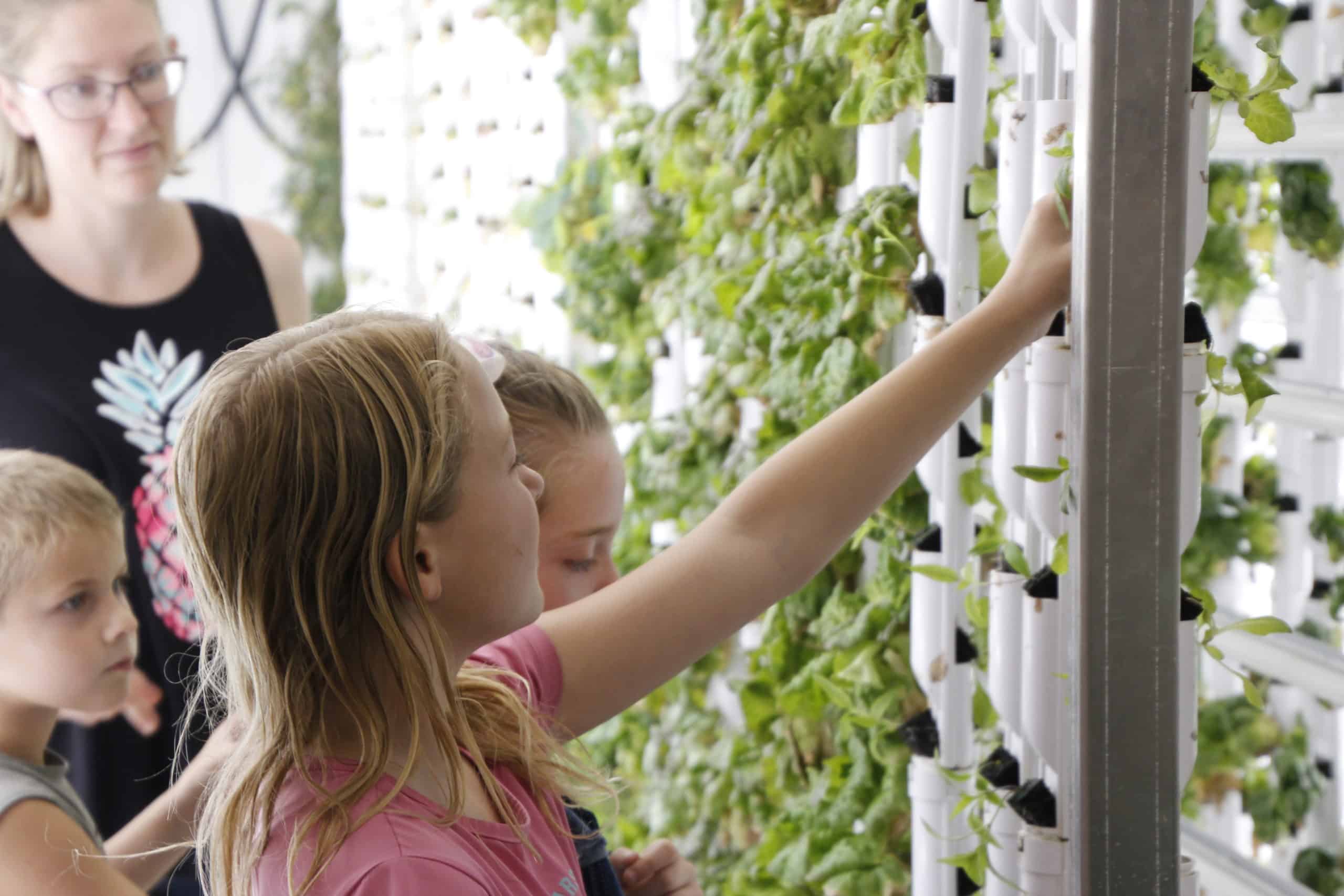
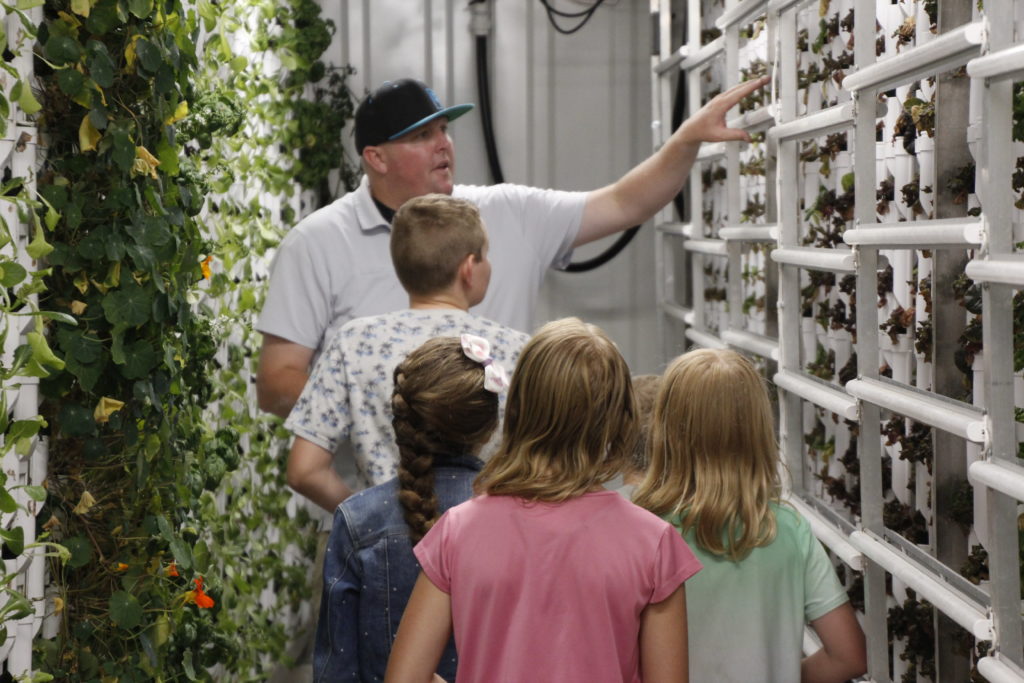
With a foundation in technology and science, there’s greater interest in container farming among students of all ages. Controlled-climate farming enables people to grow food almost anywhere in the world, helping to eliminate food deserts.
Container Farms on School Campuses – School districts and teachers are always looking for new and innovative tools to capture their students’ attention and promote enthusiasm for learning.
Teaching students how their education is interwoven into later professional success just might bring purpose to those who currently find none in a traditional classroom. When you place students in a setting with engaging hands-on projects that give them practical experience, the potential for future success is limitless.
An operating container farm has a unique ability to touch multiple subjects and areas of interest for young students, especially those who want to find ways to better our world through science and tech. A container farm shows the next generations how to do more with fewer resources by engineering concrete solutions that promote sustainability. These applications have positive real-world implications, including improving our ability to feed people in food deserts and reducing the use of fossil fuels for shipping food over long distances.
Emerging technologies, including those that rely on sensors, have opened up new avenues and ideas and solutions for longstanding problems. This is an exciting prospect for a generation that increasingly is looking to eschew the typical 9-to-5 office grind and, for lack of a better term, get their hands dirty.
From using cultivation methods that require less energy and water, to developing a solid business plan, to maintaining the mechanisms that enable containerized farms to thrive, to demonstrating and quantifying the sustainability of such operations, there are many skill sets needed to make the endeavor a success.
Adding a container farm to a school campus offers high-level learning opportunities in perpetuity and equips students with expertise and experience that few other young professionals or college applicants can claim. It’s a tech-driven differentiator for schools and districts that pride themselves on thinking outside the educational box, and it could produce a wave of future entrepreneurs.
Today, container farming is a glimpse into the future. Soon, it will be the new normal, and it’s time that students of all ages get introduced to concepts that can help achieve progress that will benefit humankind.
What are the benefits to schools?


View The FarmBox Gourmet Mushroom Container Farm