Food System Resiliency in a Box, No Matter Where You Live

For centuries, the ability to grow food has been bound by geography. Fertile soil, predictable weather and access to water determined who could farm and who could not. But a new era in agricultural technology is set to dismantle those boundaries, giving people everywhere the power to grow their own food, regardless of climate, location or experience. From the frozen outskirts of Alaska to the heart of desert cities, innovations in controlled-environment agriculture (CEA) are reshaping what it means to be self-sufficient.

At the core of this movement are systems designed to make farming as accessible as it is sustainable. Container farms, vertical gardens and modular hydroponic units are transforming empty lots, parking garages and even rooftops into thriving centers of food production. These systems use precise sensors and automation to control every variable — from temperature and humidity to light spectrum and nutrient delivery — creating optimal growing conditions 365 days a year. The result is reliable, pesticide-free food that can be harvested within walking distance of the people who will eat it.
For families and communities once disconnected from the source of their food, this technology offers more than convenience; it restores agency. No longer dependent on global supply chains or industrial farms, people can now produce mushrooms, fresh greens, herbs and even some fruits with minimal land and water use. It’s a form of empowerment that reaches beyond nourishment; it reconnects humans with nature in a way that fits our modern, urbanized lives. A shipping container on the edge of town can now provide thousands of pounds of produce annually, feeding schools, hospitals and neighborhoods that historically have faced food insecurity.

Emerging ag tech is also bridging cultural and economic divides. In developing regions where arable land is scarce or drought is common, compact, solar-powered systems allow for year-round harvests. In major cities, startups are pairing automation with education, helping residents learn the science of growing and inspiring a new generation of urban farmers. Every innovation, from AI-driven irrigation systems to seed-to-harvest data analytics, is refining the process and making local food production more efficient and attainable than ever before.

As climate shifts challenge traditional agriculture, these technologies are proving to be more than a novelty; they’re a blueprint for resilience. They reduce water consumption by up to 95 percent, eliminate the need for chemical pesticides and drastically reduce food miles, cutting emissions tied to transport and storage. More importantly, they shift the narrative from dependence to participation. Food is no longer something that happens on distant farmland; it’s something that can thrive anywhere people choose.

The democratization of food production marks a turning point in human history. Agriculture began as a means of survival and evolved into an industry. Now, with emerging ag tech, it’s coming full circle, returning to individuals and communities who can once again grow what sustains them. It’s a movement defined not by scale, but by access, creativity and connection. And as the technology continues to advance, it carries with it a simple but transformative promise: no matter where you live, you can cultivate your own future.
Solving Global Food System Inefficiencies With Hyperlocal Farming

As we navigate our way through the latter half of this decade, the global food system faces mounting pressure as climate change, population growth and resource scarcity converge.

Massive amounts of food are lost or wasted every year due to inefficient supply chains, long-distance transportation and spoilage during storage and distribution. Meanwhile, food insecurity continues to rise in both developed and developing nations. The current model, which relies heavily on centralized production and global logistics, is unsustainable in the long term and increasingly vulnerable to disruption (watch our recent video about this very subject).

Traditional agriculture, while capable of producing food at scale, is dependent on consistent weather, large plots of arable land and access to water. In many regions, those resources are dwindling or have become unreliable. Supply chain interruptions caused by natural disasters, pandemics or geopolitical conflicts can create severe bottlenecks, leaving communities without access to fresh, nutritious food. These inefficiencies impact not only consumers but also farmers who face limited market access and price instability.

Hyperlocal farming using controlled-climate shipping containers presents a promising solution. By growing food right where it’s needed, communities can bypass many of the pitfalls of traditional supply chains. These container farms operate year-round, regardless of weather, and require significantly less land and water than outdoor farming. With precise control over temperature, humidity, and lighting, they can produce consistent, high-quality crops with fewer inputs and less waste.

Another benefit of hyperlocal container farming is its ability to reduce emissions associated with food transportation. Food often travels thousands of miles before reaching consumers, contributing significantly to greenhouse gas emissions. Growing crops in or near the communities where they’ll be consumed drastically cuts down on fuel use and packaging waste. It also allows produce to be harvested at peak ripeness, preserving flavor, nutritional value and shelf life.

Container farms can be integrated into urban environments, school campuses and corporate headquarters, making farming accessible in places where it wasn’t previously feasible. These farms can strengthen local economies by creating jobs, supporting small businesses and empowering residents to take control of their food sources. They also offer educational opportunities and foster a deeper connection between people and the food they eat.

While hyperlocal farming isn’t meant to replace traditional agriculture entirely, it plays a vital role in building a more resilient, efficient and equitable food system. By supplementing the global supply chain with localized, sustainable production, communities can better weather disruptions and ensure access to fresh food. Controlled-climate farming is no longer just an innovation—it’s a necessary step toward a future where food security isn’t dictated by distance or disaster.

Controlled-Environment Agriculture: A Crash Course

Let’s start from the beginning.

Controlled-environment agriculture (commonly known as CEA) is a method of growing crops in an enclosed environment where climate parameters such as temperature, humidity, lighting and watering schedules, CO2 levels and nutrient delivery are precisely regulated. The goal is to create optimal growing conditions year-round, regardless of what’s happening outside.

HVAC systems regulate temperature and humidity, while LED or high-pressure sodium grow lights provide consistent light intensity and spectrum, mimicking natural sunlight. In hydroponics, plants are fed a nutrient-rich water solution and grow without soil (FarmBoxes typically utilize coco coir plugs as the substrate). In aeroponics, roots are suspended in the air and misted with nutrients, and aquaponics combines hydroponics with fish farming, using fish waste as plant fertilizer.

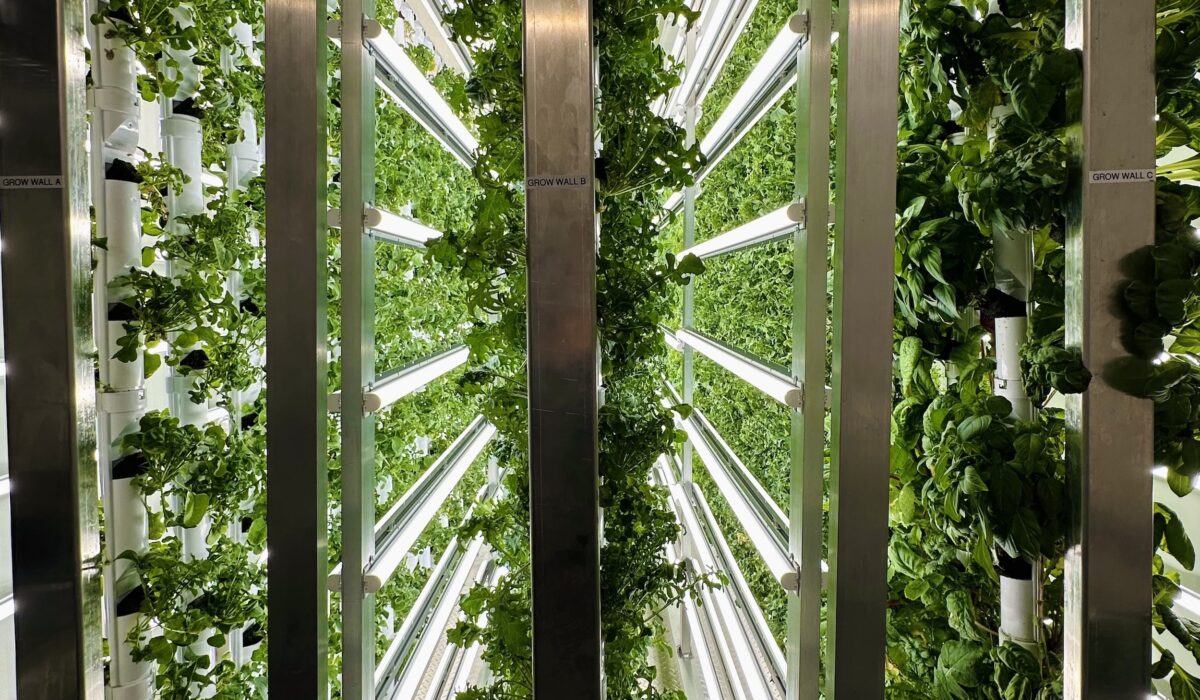
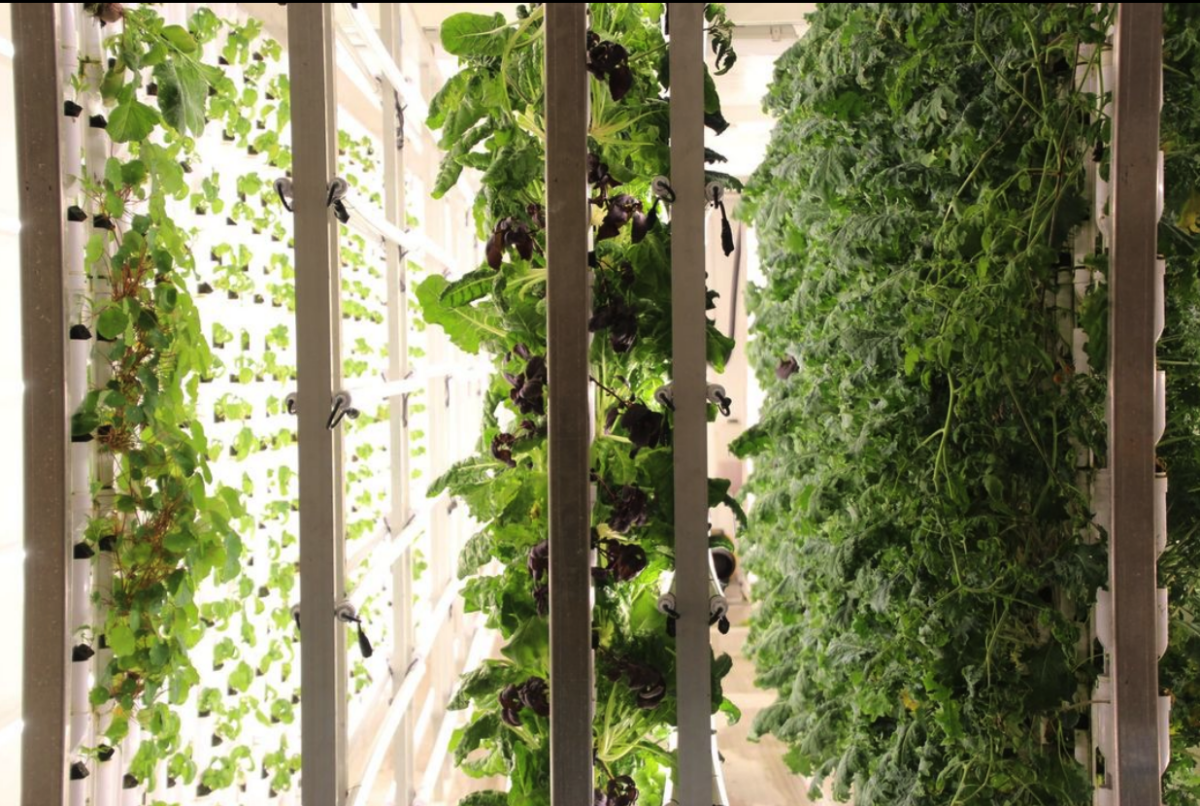
In concert with software, sensors placed in key areas within the farm monitor and adjust temperature, humidity, pH and nutrient levels in real time. Closed-loop irrigation systems reduce water usage, and energy requirements are nominal when compared with traditional outdoor growing. Of course, there will always be a need for conventional farming methods. After all, no one will be growing 8-foot-tall corn stalks (for example) en masse in an indoor environment for a variety of reasons. A view of movable grow walls in a Vertical Hydroponic Farm made by FarmBox Foods.

CEA promises year-round crop production, a critical tool for those living in locales that don’t support food production due to climate conditions, poor soil, limited growing seasons or other factors. This is done without pesticides, and operators of CEA units often see high yields and faster growth cycles while using less land area. Hyper-localized food production results in decreased transportation emissions, helps the harvested goods retain their shelf life and full nutrient density, reduces supply chain vulnerabilities, and protects against common diseases that can wipe out an entire season’s worth of crops in short order.

Emerging trends in CEA include increasing use artificial intelligence to optimize yields, detect plant diseases and predict ideal harvest times. Meanwhile, more CEA farms are integrating renewable energy sources to lower costs and carbon footprints.

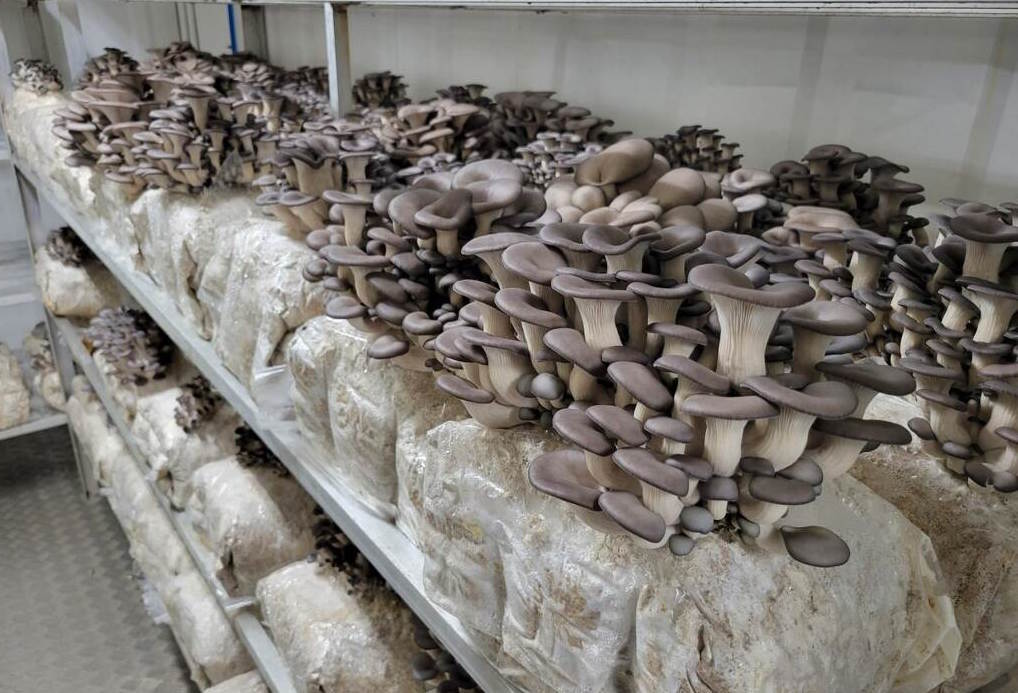
It’s worth noting that controlled-environment ag goes beyond just plants. Amateur mycologists have spawned businesses that focus on commercial-scale production of fungi, including the sought-after varieties such as lion’s mane, oysters, chestnuts, enoki and king trumpets.

These farms that allow for sustainable food production are being used in a multitude of industries, including education, grocery, food service, nonprofit, residential, workforce development and hospitality, and are bolstering food system resiliency for islands and people living in remote areas.

Indoor farms are not the entire solution for feeding our growing global population, but they’ll be a critical cog in the machine as we navigate an unpredictable food-production future.


— —   —  — — —


Greenhouse alternatives, functional mushroom growing, mushroom tincture, vegetable farming unit, mushroom growing system, mushroom grow box, organic food production, stranded oil and gas asset usage, uses for flare gas, Conex growing container, zoo food production, grow your own feed, barley for grassfed beef, Wagyu cattle feed, how to spend esser funds, grow your own feed, cattle feed production, barley grass chicken feed, growing livestock fodder, barley grass production, off-grid farming, tree propagation, how to grow tree seedlings, DIY mushrooms, starting a farm, how to start hydroponic growing, how to start growing mushrooms, container startup business, solutions to food deserts, island agriculture practices, sustainable food production on islands, small-scale farming in island communities, resilient food systems for islands, island permaculture initiatives, hydroponics in island farming, local food sourcing on islands, sustainable urban agriculture, vertical farming techniques, small space farming ideas, urban homesteading practices, indoor farming innovations, container gardening in a city, hydroponic systems for urban farms, sustainable agriculture, water-efficient farming, eco-friendly farm, sustainable food production, organic farming for sustainability, shipping container farm, mushroom farm, mushroom farming, mushroom cultivation, , growing mushrooms for profit, and climate-smart agricultural practices

How to Meet Food Demand for a Growing Global Population

Meeting global food needs in the coming years is going to require some ingenuity, marrying a combination of strategic changes and innovations across various aspects of the food system.

As you might have guessed, sustainable agriculture practices are at the forefront of what FarmBox Foods is doing as a company to help move that needle. It’s part of the company’s mission to promote and adopt sustainable farming practices, such as hyperlocal growing, conservation agriculture, and concepts that help minimize environmental impact and enhance long-term soil fertility. FarmBox is well aware that it’s not the entire solution, but we endeavor to play our part to the extent possible.

There are several things happening outside of our purview that we wholly support, among them: embracing precision agriculture technologies including sensors, drones and data analytics. But where we’re strongest is: optimizing resource use, improving crop yields, diversifying available foods, reducing food waste, and lowering the carbon footprint associated with agriculture.

Perhaps the company’s strongest contribution is in helping to shore up the protein needs of communities in need. Conditions are such that raising livestock has become a gamble in some areas of the world, particularly where drought plays a large role. So what can be done? Large-scale mushroom farming in a container is filling those nourishment gaps.

Much work is being done to invest in crucial research and development of climate-resilient crop varieties that can withstand extreme weather conditions, helping ensure stable yields in the face of climate change.

Many nations are also implementing efficient water management practices, including drip irrigation and rainwater harvesting, to conserve water resources and address water scarcity challenges.

Developing and implementing strategies to reduce food loss and waste at every stage of the food supply chain, from production and storage to distribution and consumption, is also a key area of interest for FarmBox Foods, given that our model is meant to empower individual communities with the ability to grow their own food.

Governments worldwide are fostering international collaboration and partnerships to share knowledge, technologies, and resources to address global food challenges collectively. They’re implementing policies that promote sustainable agriculture, support research and innovation, and incentivize environmentally friendly practices. Likewise, more private sector entities are increasing education and awareness regarding sustainable and healthy food choices and promoting consumer understanding of the impact of their dietary habits on both personal health and the environment.

According to the U.N.’s Food and Agriculture Organization, we will need to produce 60 percent more food to feed a world population of roughly 9.3 billion by 2050. It’s an ambitious goal with staggering consequences if we get it wrong. Addressing global food needs requires a holistic, integrated and coordinated approach that considers social, economic and environmental factors. Sustainable and resilient food systems will play a crucial role in ensuring food security for our growing global population. Now is the time for each individual and company to calculate where and how they can contribute.