The Villages Charter School is expanding hands-on agricultural education through the use of a controlled-climate Hydroponic Fodder Farm, giving students direct exposure to modern feed production and agricultural technology. 
Integrated into the school’s agriscience and animal science programs, the modular system supports experiential learning while introducing students to controlled environment agriculture and its role in resilient food systems.
The fodder farm — designed and manufactured by FarmBox Foods — is part of a broader initiative that includes the deployment of Hydroponic Fodder Farms and Vertical Hydroponic Farms across four Sumter County Schools facilities, said Vice Principal Dr. Kelly Colley.
The Villages Charter School, a K-12 workforce development hub, serves as an economic development instrument for The Villages community, educating children whose parents work for The Villages corporation or its partner businesses.
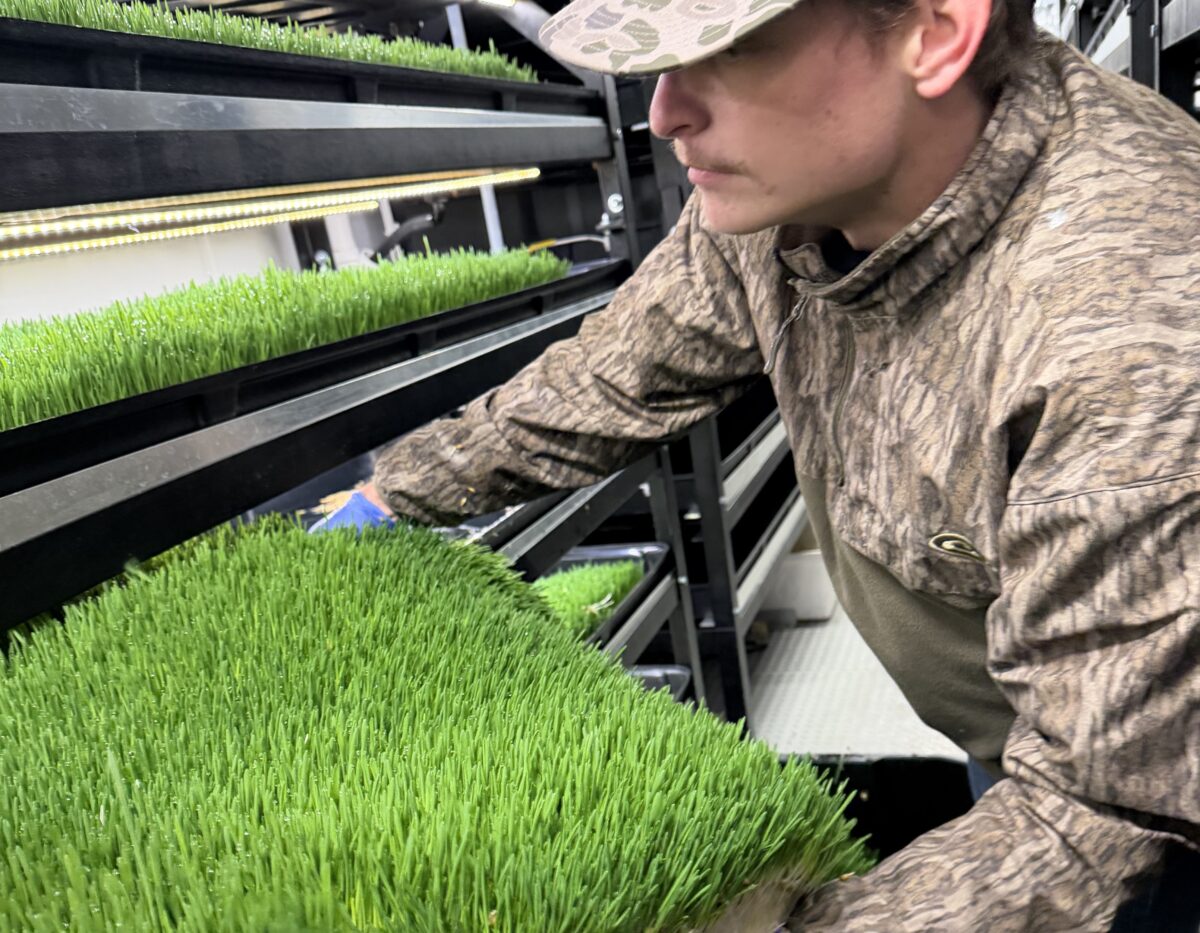
Heather Chastain, who teaches agriscience foundations, agritechnology and animal science, says while the region is rapidly growing, it’s strongly rooted in farming and livestock traditions, and residents remains deeply connected to agriculture. Her students are using the fodder farm as a research and production tool to study how the school’s livestock respond to feed that’s richer in vitamins and minerals. Students are growing fresh barley fodder on site and evaluating its potential to reduce feed costs and replace hay during winter months when pasture grass goes dormant. The system also allows students to explore nutrition, animal health and feed efficiency through applied, real-world experimentation.
The decision to purchase a fodder farm was partly driven by challenges following recent hurricanes, which caused flooding and limited access to grazing areas for extended periods. Producing feed indoors allows the program to continue supporting livestock even when fields are inaccessible, improving preparedness for future storms. The system also creates opportunities to assist neighboring programs during disruptions by maintaining consistent feed production all year.
Approximately $1.7 million in grant funding was secured through a partnership with Sumter County Schools, led by Casey Ferguson, director of career and technical education and adult education. Ferguson evaluated multiple container farming solutions and identified FarmBox Foods as the best fit to meet both educational goals and operational needs across the district.
Students have quickly taken ownership of the system, with two students handling daily and weekly maintenance while others engage during harvest and feeding. The technology has attracted students who may not otherwise be drawn to traditional animal agriculture by emphasizing automation, data and problem solving. School leaders view the FarmBox Foods fodder farm as a powerful tool for showcasing the intersection of agriculture and technology while opening conversations around resilience, sustainability, innovation and food security in small rural communities.
To learn more about the programming or to schedule an interview with the school’s leadership, email Dr. Kelly Colley at kelly.colley@tvcs.org.