
The concept of food autonomy is nothing new, but it’s going to take on greater meaning and importance as we chart our way into the future.
Food autonomy is essentially the ability of a community, region or nation to reliably produce a meaningful portion of its own food locally rather than depending heavily on imports and long supply chains. In remote regions and islands, food autonomy is becoming increasingly important because these areas are often highly vulnerable to disruptions caused by supply chain disruptions, extreme weather and short growing seasons, geopolitical instability, fuel price spikes and limited arable land.
For islands and isolated communities, food autonomy is not necessarily about producing 100 percent of all food locally. Instead, it’s about increasing resilience by ensuring access to essential fresh foods, proteins and staple crops even when outside supply chains fail.
Why Remote Regions and Islands Struggle With Food Security
Many islands and remote communities import upwards of 95 percent of their food. That dependence creates several challenges, like high transportation costs, food spoilage during transit, limited shelf life, and price volatility tied to fuel and shipping, just to name a few.
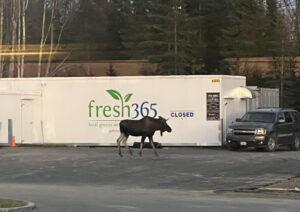
Places like the Caribbean islands, Iceland, remote communities in Alaska and many Pacific islands have all invested in alternative food production systems because traditional farming alone cannot reliably meet local demand.
The Best Solutions for Building Food Autonomy
No single technology solves food autonomy by itself. The strongest systems combine multiple approaches tailored to climate, geography, energy availability, and cultural preferences.
Controlled-Environment Agriculture (CEA)
Controlled-environment agriculture is one of the most effective tools for remote food production because it allows crops to grow consistently, regardless of outside weather conditions.
This includes hydroponics and mushroom cultivation in containers, vertical farming in permanent structures, greenhouses and aquaponics operations.
Benefits of course include year-round production, reduced water usage, minimal pesticide requirements, protection from storms and drought, predictable yields and production near the consumer.
Container farms are particularly effective in remote regions because they can be shipped nearly anywhere and begin producing quickly without requiring extensive infrastructure. Arctic communities can grow leafy greens year-round, far-flung military installations can reduce imported produce dependence, island resorts can produce herbs and greens onsite, and disaster-prone regions are able to maintain food production after storms.
Renewable Energy Integration
Food autonomy and energy autonomy are closely linked. Remote regions often face extremely high electricity costs because power is generated with imported diesel fuel. Pairing food systems with renewable energy improves long-term viability.
The technologies that help make this a reality include solar microgrids, high-capacity battery storage, wind power, waste-to-energy systems and heat-recovery systems. For example, solar-powered desalination combined with hydroponics can enable crop production in regions with little freshwater availability.
Water Independence Systems
Water scarcity is one of the largest barriers to local agriculture on islands.
The most successful autonomous food systems often combine initiatives like rainwater harvesting, atmospheric water generation, water recycling, the aforementioned desalination and closed-loop hydroponic systems.
Hydroponics can use up to 90–95 percent less water than traditional soil farming depending on the crop and system design.
Diversified Local Production
True food autonomy requires diversity. Communities that rely on only one growing system remain vulnerable. The strongest autonomous food models combine indoor farms, outdoor regenerative agriculture, community gardens, aquaculture, hydroponic fodder systems, agroforestry and local fisheries. Diversification reduces the risk of catastrophic failure from disease, storms or infrastructure outages.
Local Workforce Development
Technology alone does not create food autonomy.
Communities may require agricultural education, technical training, youth engagement, entrepreneurial support and local maintenance capabilities. Some of the most successful remote farming initiatives train residents to operate and maintain advanced systems locally instead of relying on outside experts.
Seed Sovereignty and Crop Selection
Crop selection matters enormously. Leaders in remote regions know to prioritize crops that are nutrient dense, that grow fast, generate high yields, are climate adaptable and are easy to store or preserve.
Leafy greens, herbs, tomatoes, peppers, microgreens, root vegetables and fodder crops are often strong candidates for controlled-environment production. Communities also benefit from maintaining local seed banks and preserving regionally adapted crop genetics.
Food Storage and Processing Infrastructure
Autonomy is not just about growing food. It also involves preserving it.
Critical systems include cold storage (see The SideKick), freeze drying, canning, fermentation, local food processing and grain storage. Harnessing old and new practices to reduce the likelihood of post-harvest losses dramatically improves resilience.
Real-World Models Emerging Today
Several regions are becoming models for autonomous food systems:
- Singapore has aggressively invested in vertical farming to improve domestic food production.
- United Arab Emirates has expanded controlled-environment farming to address desert agriculture challenges.
- Iceland uses geothermal-powered greenhouses for year-round food production.
- Remote northern communities in Canada and Alaska increasingly use modular hydroponic systems to reduce dependence on flown-in produce.
The Most Effective Overall Strategy
The strongest path to food autonomy is usually a hybrid model that combines:
- Controlled-environment agriculture for reliable fresh produce
- Renewable energy systems
- Water independence infrastructure
- Traditional agriculture where feasible
- Local training and workforce development
- Food preservation and storage
- Strong community participation
Food autonomy is ultimately about resilience, predictability and local empowerment. For remote regions and islands, the goal is not isolation from global trade at all. The goal is reducing vulnerability while ensuring communities can continue feeding themselves during disruptions and economic instability.