
Food prices have been a major concern for consumers over the last several years, but an emerging challenge in 2026 is adding even more pressure to grocery bills: a worldwide fertilizer shortage.
Fertilizer, comprising nitrogen, phosphorus, potassium and other essential nutrients, helps crops achieve the yields needed to feed our growing global population. When fertilizer supplies become constrained or prices rise dramatically, farmers are forced to make difficult decisions that can ultimately affect food availability and affordability. That’s exactly what we’re seeing now.
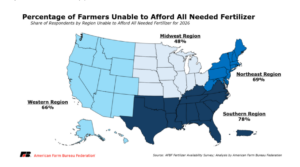
The impact of fertilizer shortages didn’t show up overnight. Instead, it has followed a chain reaction. As fertilizer prices rise, growers must either absorb the additional costs, reduce fertilizer application rates or shift to crops that require fewer inputs. In some cases, using less fertilizer can lead to lower yields, which means less food entering the marketplace. When supply tightens, prices tend to rise, and consumers are now feeling the squeeze.
Not all foods are affected equally. Fertilizer-intensive commodity crops such as corn, wheat and soybeans are often among the most vulnerable. Since these crops are used extensively in livestock feed, higher production costs can eventually ripple through the food system, affecting meat, dairy and egg prices.
Produce will also feel the effects, particularly field-grown vegetables such as lettuce, cabbage, broccoli and onions. However, the increase may be more moderate compared to some commodity crops because fertilizer represents only one component of overall production costs. Labor, transportation, water and packaging also play significant roles in determining produce prices.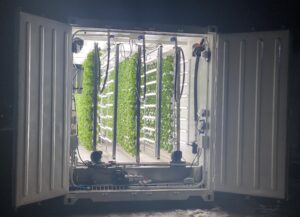
This evolving situation shines a spotlight on the advantages of controlled-environment agriculture (CEA), including hydroponic container farms, greenhouses and indoor vertical farms.
Unlike conventional field agriculture, controlled-environment systems typically use nutrients much more efficiently (FarmBoxes utilize liquid nutrients). Hydroponic growing methods deliver nutrients directly to plant roots and often recycle water and nutrients throughout the production cycle. This reduces waste and allows growers to produce more food with fewer inputs.
As fertilizer prices rise, the efficiency of controlled-environment agriculture becomes even more valuable. While CEA operators are not immune to higher nutrient costs, the impact is often less severe because of their ability to precisely manage nutrient delivery and minimize losses.
Additionally, controlled-environment farms offer benefits that extend beyond fertilizer efficiency. Local production reduces transportation requirements, shortens supply chains and provides communities with a more reliable source of fresh food regardless of weather conditions or global market disruptions.
“We’re trying to reach those communities that are more vulnerable to shifts in the food system. That includes remote locations like the Alaskan tundra and islands, where weather and supply chain issues are more pronounced,” said Chris Michlewicz, vice president of public relations for FarmBox Foods.
For organizations focused on food security, community resilience or sustainable food production, fertilizer shortages serve as a reminder that the future of agriculture will depend on more than just maximizing yields. It will require building systems that can adapt to supply chain disruptions while continuing to deliver fresh, nutritious food.
As global fertilizer markets remain uncertain, controlled-environment agriculture is proving to be more than an alternative growing method. It is becoming an increasingly important tool for creating predictable, resilient and efficient food production systems in an unpredictable world.