
Walk into any health food store or scroll through a wellness website and you’ll quickly notice that functional mushrooms come in many forms. Fresh lion’s mane at a farmers market. Dried slices in resealable bags. Powders, capsules, tinctures and extracts promising focus, immunity or stress support. 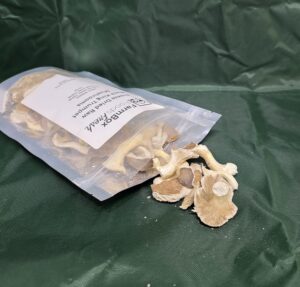
They all come from the same mushroom, so what’s the real difference?
The short answer is that form matters. How a mushroom is prepared directly affects how its beneficial compounds are preserved, concentrated and absorbed by your body. Understanding these differences can help you choose the option that best fits your lifestyle and health goals.
Let’s break it down.
Fresh Mushrooms: Closest to Nature
Fresh functional mushrooms are exactly what they sound like: whole, living mushrooms harvested and used in their natural state. Lion’s mane, reishi and oyster mushrooms are increasingly showing up in kitchens thanks to their culinary appeal and growing popularity.
From a nutritional standpoint, fresh mushrooms contain a wide range of naturally occurring compounds, including polysaccharides, antioxidants, fiber and micronutrients. When cooked properly, they can be a flavorful way to support general wellness as part of a balanced diet.
However, it’s important to note: many of the compounds that make functional mushrooms so interesting, particularly beta-glucans and certain neuroactive compounds in lion’s mane, are locked inside tough fungal cell walls made of chitin. Cooking helps, but it does not fully break those walls down. That means your body may not absorb everything the mushroom has to offer.
Fresh mushrooms also have a shorter shelf life and inconsistent potency. One harvest may be stronger than another, and dosing for specific functional benefits is difficult to measure.
Fresh is excellent for food and foundational nutrition, but it is not always the most efficient way to access functional compounds.
Dried Mushrooms: Concentrated and Shelf-Stable
Drying mushrooms removes their water content, which concentrates many of their nutrients and significantly extends shelf life. Dried mushrooms (dehydrated for freeze dried) can be sliced, ground into powders or rehydrated for cooking.
This form offers a step up from fresh in terms of consistency and convenience. Dried mushrooms are easier to store, easier to transport and allow for more predictable serving sizes. When ground into a powder, they can be added to smoothies, coffee or recipes without changing texture too dramatically.
That said, dried mushrooms still retain much of their chitin structure. While drying concentrates the mushroom, it does not fully unlock all bioactive compounds. You may still be leaving some benefits on the table, especially if your goal is cognitive support, immune modulation or therapeutic-level effects.
Drying also depends heavily on temperature and technique. Improper drying can degrade sensitive compounds or reduce overall quality.
Dried mushrooms sit in the middle ground: more practical than fresh, more potent for daily use, but sometimes limited in absorption.
Extracted Mushrooms: Designed for Absorption
Extraction is where functional mushrooms shift from food to targeted wellness tool.
Mushroom extracts are created by breaking down the chitin cell walls to release compounds that your body can more easily absorb. This is typically done using hot water, alcohol or a combination of both, known as dual extraction.
Hot water extraction pulls out beta-glucans and polysaccharides associated with immune and gut health. Alcohol extraction captures compounds that are not water-soluble, such as certain terpenes and neuroactive molecules. Dual extraction aims to deliver the broadest possible spectrum of benefits.
For lion’s mane specifically, extraction is especially important. Compounds linked to nerve growth factor support are far more bioavailable in extracted form than in fresh or simply dried mushrooms.
Extracts offer consistency, potency and measurable dosing. They can be taken as powders, capsules or tinctures, making them easy to incorporate into daily routines. This is the form most commonly used in research studies, which is why extracts are often referenced when discussing functional mushroom science.
The key downside is quality variation. Not all extracts are created equal. Some products use mycelium grown on grain rather than whole fruiting bodies. Others fail to disclose extraction methods or active compound levels. Choosing a reputable source matters (ahem, FarmBox Foods Fresh).
So Which Form Is Best?
There is no single right answer. It depends on your intent.
If you enjoy cooking and want to include mushrooms as part of a nutrient-rich diet, fresh mushrooms are a wonderful choice. If you want convenience and versatility with a longer shelf life, dried mushrooms make sense. If your goal is targeted support for brain health, immunity or stress resilience, extracts are typically the most effective option.
Many people use a combination. Fresh mushrooms on the plate, dried powders in recipes, and extracts as part of a daily wellness routine.
Functional mushrooms are not about quick fixes. They work best when used consistently and intentionally. Understanding the difference between fresh, dried and extracted forms helps you make informed choices and get the most out of what these remarkable organisms have to offer.