
For centuries, the ability to grow food has been bound by geography. Fertile soil, predictable weather and access to water determined who could farm and who could not. But a new era in agricultural technology is set to dismantle those boundaries, giving people everywhere the power to grow their own food, regardless of climate, location or experience. From the frozen outskirts of Alaska to the heart of desert cities, innovations in controlled-environment agriculture (CEA) are reshaping what it means to be self-sufficient.
At the core of this movement are systems designed to make farming as accessible as it is sustainable. Container farms, vertical gardens and modular hydroponic units are transforming empty lots, parking garages and even rooftops into thriving centers of food production. These systems use precise sensors and automation to control every variable — from temperature and humidity to light spectrum and nutrient delivery — creating optimal growing conditions 365 days a year. The result is reliable, pesticide-free food that can be harvested within walking distance of the people who will eat it. 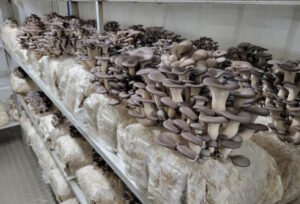
For families and communities once disconnected from the source of their food, this technology offers more than convenience; it restores agency. No longer dependent on global supply chains or industrial farms, people can now produce mushrooms, fresh greens, herbs and even some fruits with minimal land and water use. It’s a form of empowerment that reaches beyond nourishment; it reconnects humans with nature in a way that fits our modern, urbanized lives. A shipping container on the edge of town can now provide thousands of pounds of produce annually, feeding schools, hospitals and neighborhoods that historically have faced food insecurity.
Emerging ag tech is also bridging cultural and economic divides. In developing regions where arable land is scarce or drought is common, compact, solar-powered systems allow for year-round harvests. In major cities, startups are pairing automation with education, helping residents learn the science of growing and inspiring a new generation of urban farmers. Every innovation, from AI-driven irrigation systems to seed-to-harvest data analytics, is refining the process and making local food production more efficient and attainable than ever before.
As climate shifts challenge traditional agriculture, these technologies are proving to be more than a novelty; they’re a blueprint for resilience. They reduce water consumption by up to 95 percent, eliminate the need for chemical pesticides and drastically reduce food miles, cutting emissions tied to transport and storage. More importantly, they shift the narrative from dependence to participation. Food is no longer something that happens on distant farmland; it’s something that can thrive anywhere people choose.
The democratization of food production marks a turning point in human history. Agriculture began as a means of survival and evolved into an industry. Now, with emerging ag tech, it’s coming full circle, returning to individuals and communities who can once again grow what sustains them. It’s a movement defined not by scale, but by access, creativity and connection. And as the technology continues to advance, it carries with it a simple but transformative promise: no matter where you live, you can cultivate your own future.